
1. Introduction (Summary of Results)
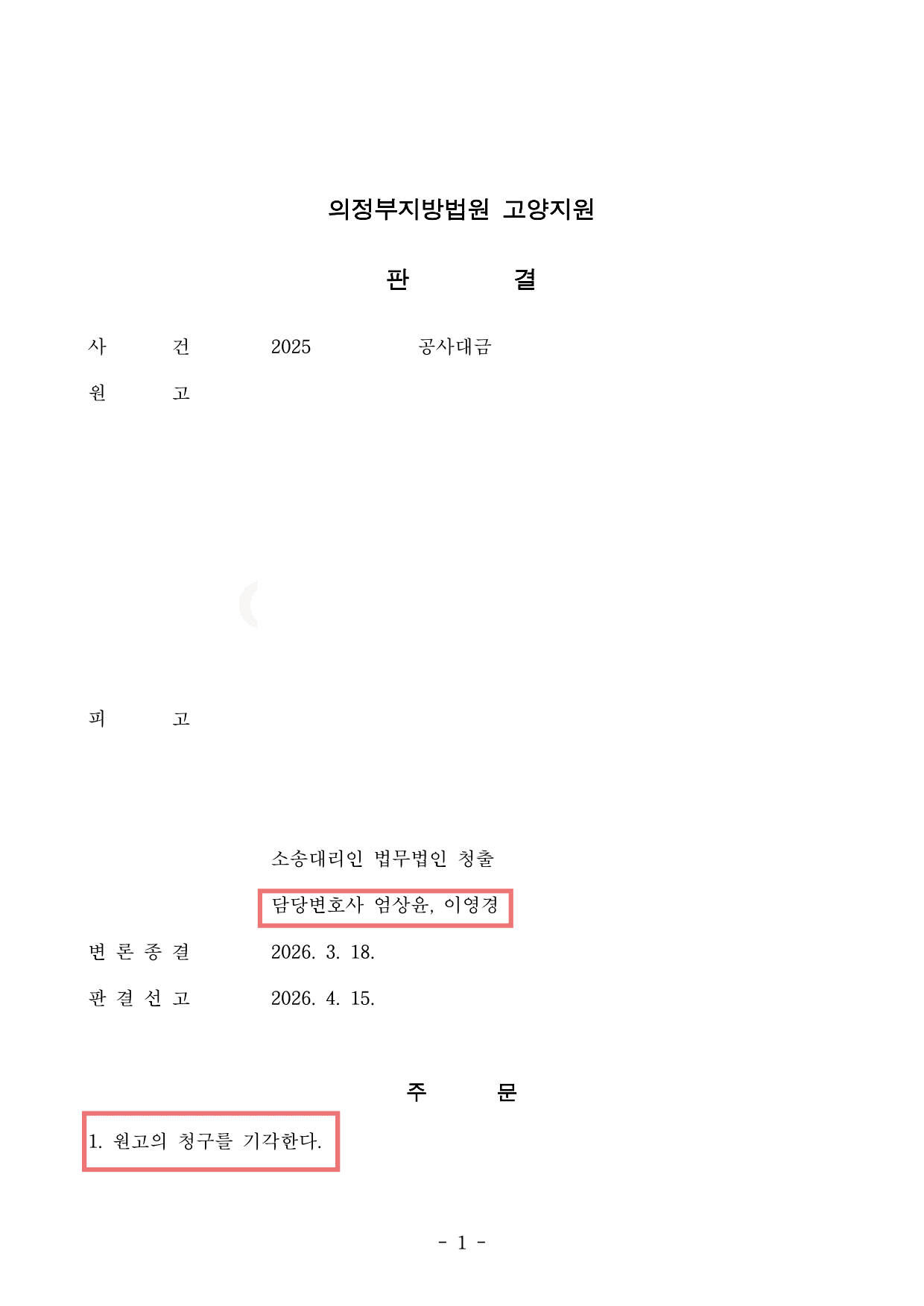
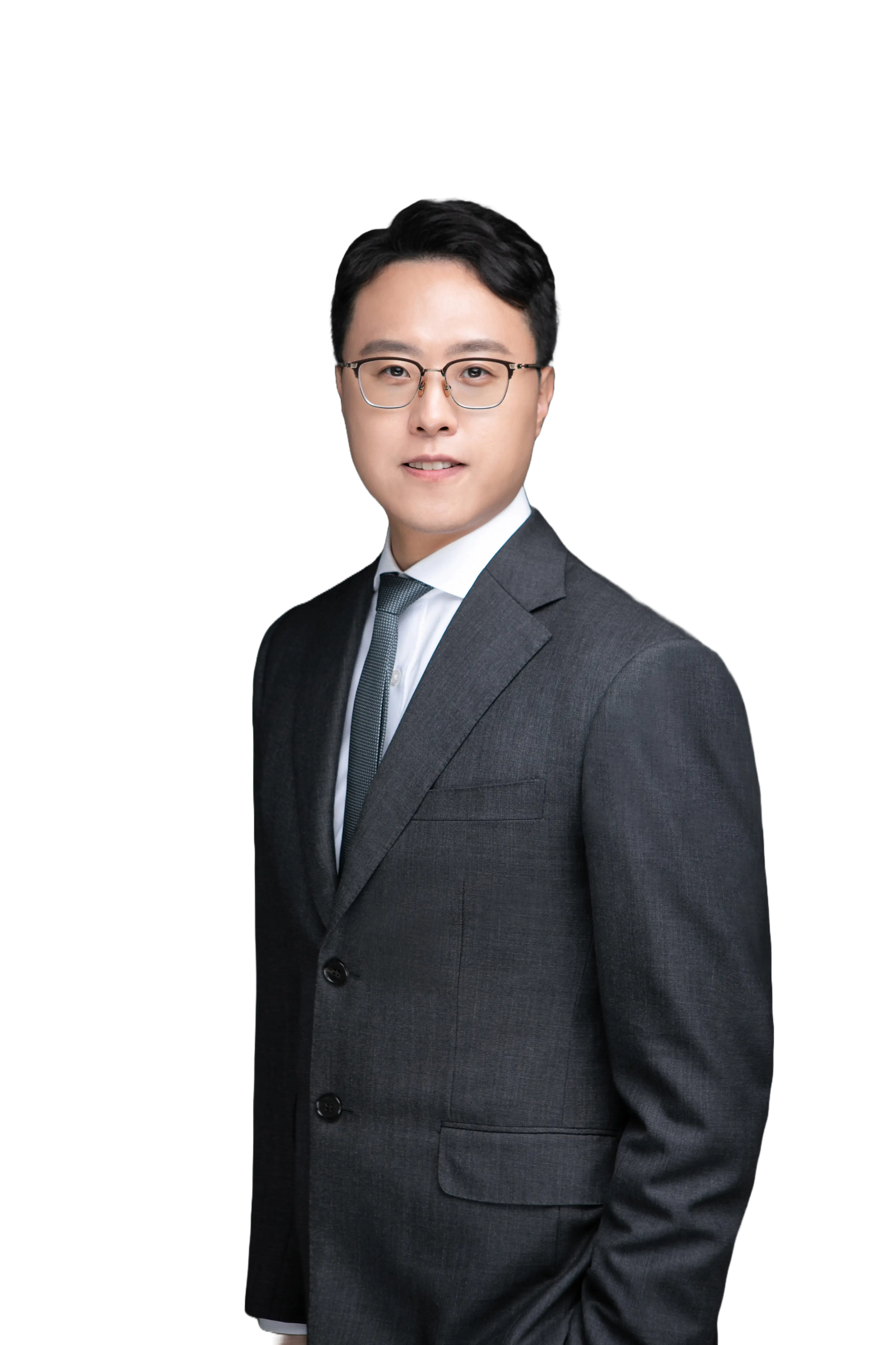
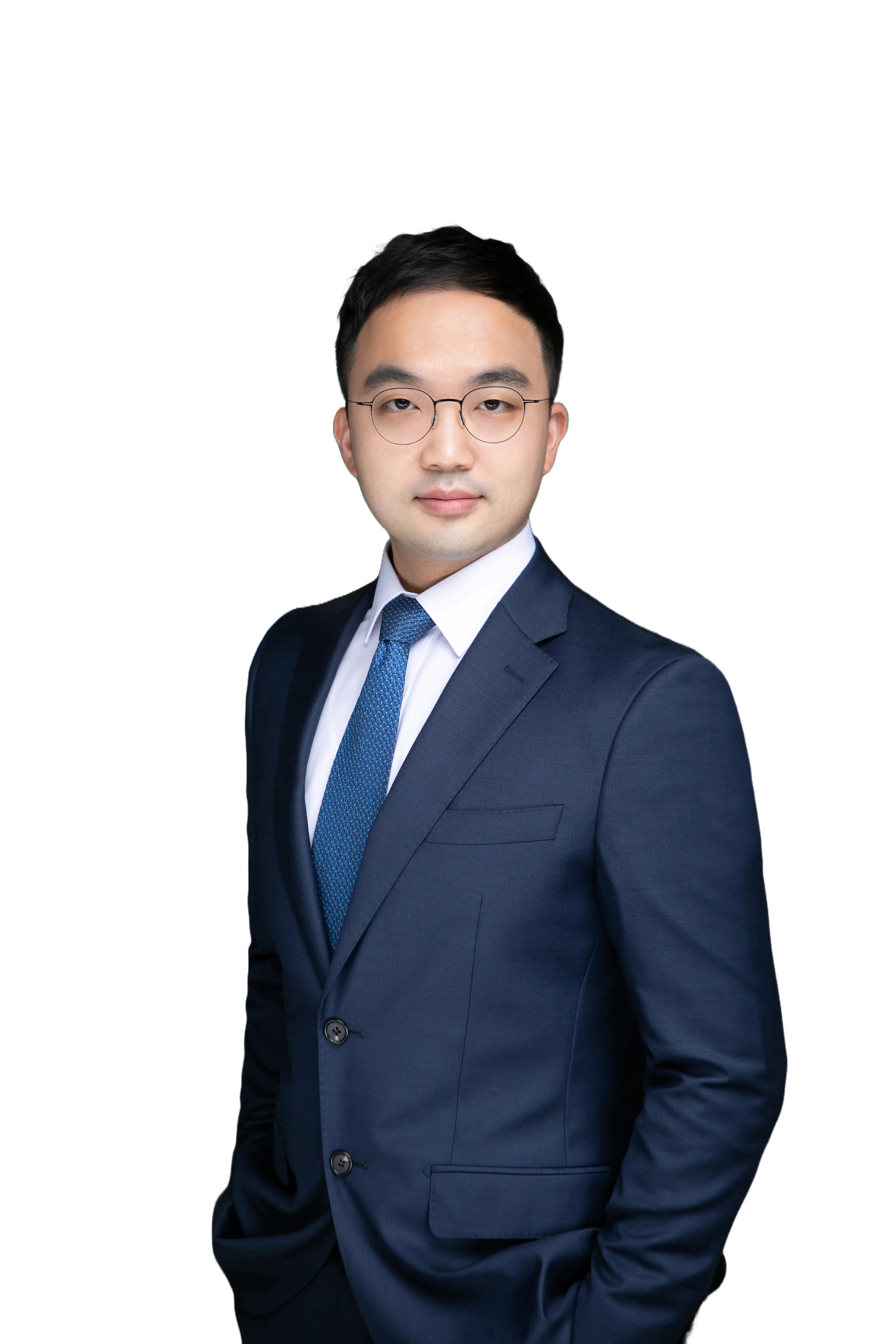
Chungchul Law Firm (attorneys in charge: Eom Sang-yun, Lee Young-gyeong, and Park Jong-han) represented the defendant in a lawsuit for payment of construction costs filed by contractor Company B (plaintiff) against building owner A (defendant), and obtained a complete defense victory (dismissal of the plaintiff’s claims) by defeating all of the plaintiff’s claims.
Although this case appeared on the surface to be a simple dispute over nonpayment of construction costs, the substance was a matter in which Company B, a name-lending contractor under a general construction business license-lending structure, sought payment again from the building owner for amounts that had already been paid to separate legal entity Company C, which actually carried out the construction. Chungchul proved the substance of the license-lending transaction structure and, by arguing the doctrine of the apparent representative director under Article 395 of the Commercial Act, led the court to find that all payment obligations for the construction costs had already been performed.
2. Background of the Case
The defendant, the building owner, entered into a general contracting agreement with contractor Company B for the construction of a neighborhood living facility for approximately KRW 1.2 billion. However, the person in charge of all construction-related work on Company B’s side was D, who was registered as an internal director of Company B and used the title of 'vice president,' while most of the actual construction was carried out by separate legal entity Company C, of which D was the representative director.
Thereafter, D asked the defendant to pay the remaining construction balance and additional construction costs to Company C, and in response to that request, the defendant paid the amounts to an account in Company C’s name.
Company B then filed a lawsuit against the defendant seeking payment of the remaining construction balance and additional construction costs that it claimed had not been paid to it.
3. Legal Issues (Chungchul’s Main Grounds and Arguments)
The core issues in this case were (i) whether the payment to Company C made at D’s direction under the license-lending structure was effective against Company B, and (ii) whether D qualified as an apparent representative director under Article 395 of the Commercial Act.
In this regard, Chungchul Law Firm strongly argued, through the following layered legal analysis, that all of the defendant’s payment defense arguments should be accepted.
(i) Creation of the appearance of an apparent representative director and the company’s responsibility Under Article 395 of the Commercial Act and Supreme Court precedent, when a company allows or tacitly approves an internal director’s use of a title with the appearance of representative authority, such as 'vice president,' the company bears responsibility toward counterparties who relied on that appearance. Since Company B registered D as an internal director and allowed the use of business cards stating 'vice president,' while enjoying the benefit of license-lending fees, it cannot avoid legal responsibility for D’s acts (ii) Legal principle for determining the contracting party in a license-lending case: According to Supreme Court precedent, even if an unregistered general contractor concluded a subcontract through name lending, if the person who actually performed the work and did so for his or her own account intended to be the contracting party, the contracting party is determined according to that substance. Therefore, the actual party to the additional construction contract is Company C, and Company B has no contractual basis whatsoever to claim the additional construction payment (iii) Effect of payment to a person authorized to receive payment D was in a position to determine the method of receiving the construction payment, and in light of the fact that the additional construction payment paid to Company C included the remaining construction balance, the defendant’s payment to Company C in accordance with D’s instructions constituted payment to a person lawfully authorized to receive it, and it was effective against Company B |
|---|
Accordingly, the court fully accepted Chungchul’s argument based on the apparent representative director doctrine, recognized that D was a person authorized to represent Company B, and held that even if D’s execution of the contract in Company C’s name exceeded his authority, Company B could not assert this against the defendant unless the defendant acted in bad faith or with gross negligence. The court also found that the additional construction payment included the remaining construction balance, and held that the defendant completed all payment obligations for the construction costs by fully paying the amounts to Company C, thereby dismissing the plaintiff’s claims.
4. Significance of This Case
This decision is significant in that it applied the apparent representative director doctrine to a dispute arising under an informal transaction structure known as general construction business license-lending, thereby strongly protecting a good-faith counterparty that relied on appearances.
Where a company gives an internal director an appearance of representative authority, such as the title of 'vice president,' and in fact delegates all business operations to that person, the company bears apparent representative director liability for that director’s designation of payment methods and acceptance of payment. The decision clearly confirmed that the risk arising from name lending or the creation of appearances cannot be shifted to the counterparty. Furthermore, it confirmed that, in a license-lending structure, a name lender who merely enjoys fee income cannot be allowed to deny the effect of payment to the actual contractor.
On the other hand, from the perspective of the counterparty, such as the building owner, the court recognized that even if payment was made to a different company rather than the contractor at the direction of a person appearing to have representative authority, the counterparty could avoid the risk of double payment by asserting the effectiveness of that payment if it relied on the appearance and there were no objective circumstances giving rise to suspicion.
Related work cases that are good to see together
Corporate advisory · Dispute
AI · Emerging Business
[Consultation] Advice on improper inducement of personnel under the Fair Trade Act
Corporate advisory · Dispute
[Consultation] Legal advice on reviewing a model contract for advertising agencies.
Fair Trade
[Consultation] Legal advice on whether there are any violations of the Fair Trade Act related to transactions with large corporate affiliates.


서울 강남구 테헤란로 403 리치타워 7층
Tel. 02-6959-9936
Fax. 02-6959-9967
cheongchul@cheongchul.com
개인정보처리방침
면책공고
© 2025. Cheongchul. All rights reserved