
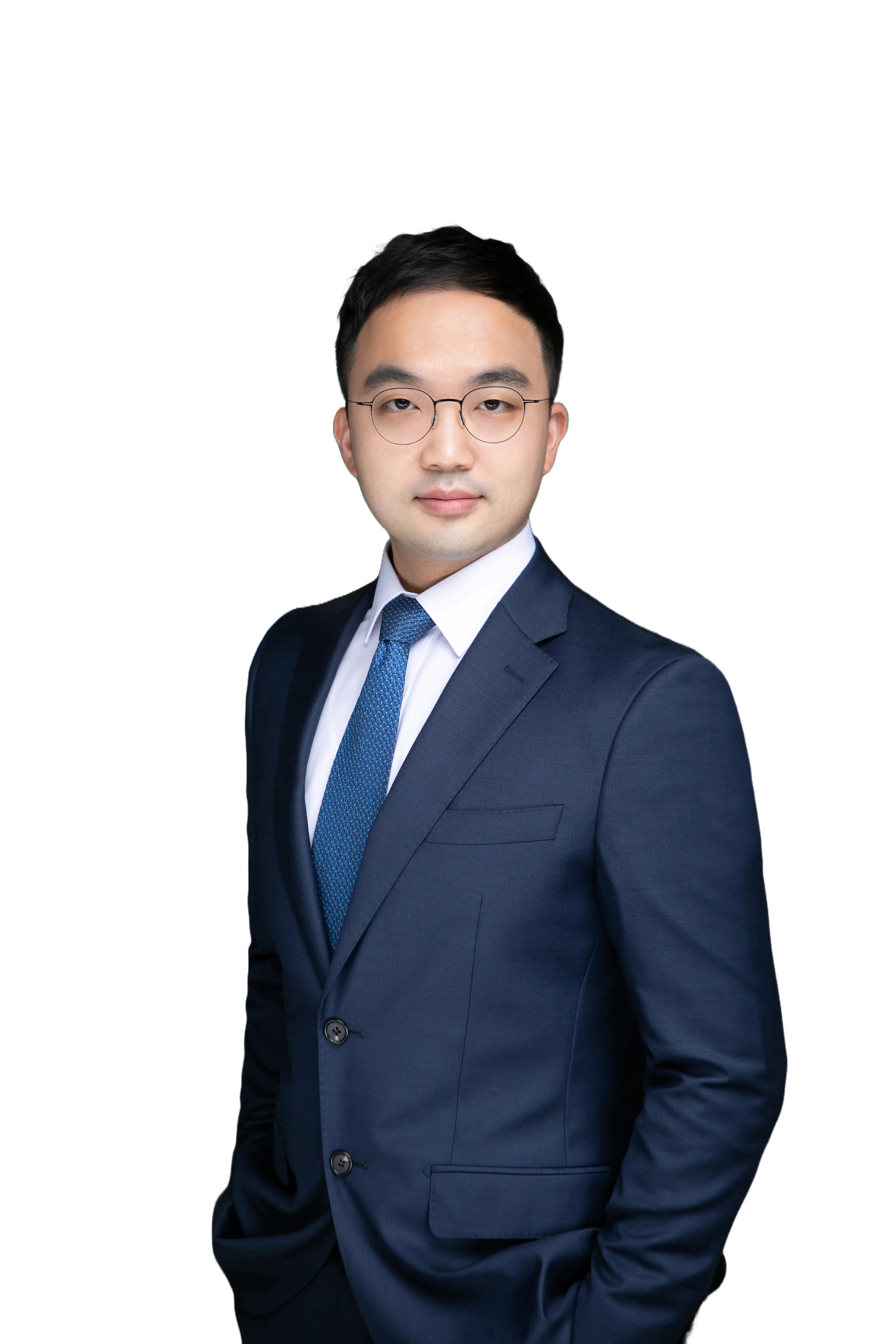
Hello, this is attorney Lee Young-kyung of Cheongchul Law Firm.
On 11 August 2026 the Korea Fair Trade Commission (KFTC) announced that its examiner had submitted an examiner's report — setting out the conduct found, the assessment of illegality and the recommended measures — to the Commission on 7 August 2026, and served it on seven respondents (referred to here as companies A to G) on 11 August 2026, opening the deliberation stage. The examiner puts the scale of the alleged cartel at roughly KRW 294 billion in contract value across 706 tenders and service contracts. The investigation is complete and the report has been filed, but the Commission has not yet reached a final decision. This article is based on the KFTC press release of 11 August 2026, with the individual companies anonymised as A to G. Please note that an examiner's report reflects the examiner's assessment and does not bind the Commission's final decision.
The case at a glance – examiner's report filed (deliberation opened)
The examiner concluded that seven laboratory testing contractors and support providers (A to G) engaged, over roughly 12 years and 9 months, in organised bid rigging and volume allocation across 706 tenders for laboratory testing services ordered by public hospitals and other bodies, in breach of Article 40(1)(8) (bid rigging) and Article 40(1)(3) (volume restriction) of the Monopoly Regulation and Fair Trade Act, and recommended corrective orders, administrative fines and criminal referral of both the companies and their officers and employees. Those recommendations do not bind the Commission, and respondents may exercise their defence rights in full, including by submitting written opinions within eight weeks of receiving the report. The KFTC will convene the Commission after the defence procedures conclude.
● Stage: examiner's report filed (submitted 7 Aug 2026 / served on respondents 11 Aug 2026)
● Alleged cartel period: January 2012 to October 2024 (about 12 years 9 months)
● Alleged scale: 706 tenders and service contracts, roughly KRW 294 billion in contract value
● Subject: tenders for laboratory testing services ordered by public hospitals (contractors selected by competitive bidding)
● Provisions applied by the examiner: Article 40(1)(8) (bid rigging) and Article 40(1)(3) (volume restriction)
● Measures recommended: corrective orders, administrative fines, criminal referral of companies and personnel
● Defence period: written opinions within eight weeks of receipt of the report
● Final decision: deliberation to be held after the defence procedures conclude (not yet determined)
1. Background – the outsourced laboratory testing market
What is laboratory testing?
Laboratory testing means detecting or measuring particular substances in, or reading morphological abnormalities from, specimens such as blood, urine, body fluids and tissue in order to determine disease or infection — including virus testing for hepatitis and tissue examination for various cancers. Tests are classified by specimen, method and department into diagnostic testing (laboratory medicine), pathology testing (pathology) and nuclear medicine testing, and there are roughly 6,000 test items in Korea, including hepatitis C genotyping, prenatal foetal abnormality screening and breast cancer recurrence risk testing.
How public hospitals outsource testing, and competitive bidding
Hospitals outsource particular tests to specialist contractors where demand is too low to be economic or where they lack the equipment, facilities or specialist personnel. The contractor collects specimens from the hospital, performs the tests with its own personnel and equipment, and returns results through an electronic system linked to the hospital. Public hospitals have selected these contractors by competitive bidding since the late 2010s, and it is that bidding process in which collusion is alleged here.
2. The conduct found by the examiner and the provisions applied
The alleged conduct and its scale
The examiner concluded that the seven laboratory testing contractors and support providers (A to G) engaged in organised bid rigging and volume allocation across 706 tenders for laboratory testing services ordered by public hospitals and other bodies, from January 2012 to October 2024 — some 12 years and 9 months — and assessed the scale of the tenders affected at roughly KRW 294 billion in contract value. These findings and figures remain at the examiner stage and will be confirmed or adjusted through the Commission's deliberation.
Provisions applied – Article 40(1)(8) and 40(1)(3)
The examiner assessed the conduct as a very serious breach of Article 40(1)(8) (bid rigging) and Article 40(1)(3) (volume restriction) of the Fair Trade Act.
Monopoly Regulation and Fair Trade Act, Article 40 (Prohibition of Improper Concerted Acts) |
Measures recommended by the examiner
The examiner recommended corrective measures including prohibitory orders, the imposition of administrative fines, and criminal referral of the companies and their officers and employees. The Commission will make the final determination on the alleged breach through deliberation and, if a breach is confirmed, will also fix the level of sanction.
3. Procedure after receipt of the report and the respondents' defence rights
Under the KFTC's Rules on Case Procedures, a respondent that has received the examiner's report may exercise the following defence rights.
Procedural stage | Defence rights available to the respondent |
|---|---|
① Reviewing the report | Detailed review of the facts, legal analysis and recommended measures in the report and its annexes, and mapping of the examiner's reasoning and evidence |
② Inspecting the evidence | Obtaining and reviewing the underlying evidence — bid records, emails, meeting minutes — and submitting observations |
③ Written opinion (within 8 weeks) | Filing a rebuttal within eight weeks of receipt (six weeks where the case goes to a subcommittee) |
④ Preliminary hearing | Requesting a preliminary hearing at which the examiner and respondent frame the issues before the commissioners |
⑤ Commission deliberation (plenary or subcommittee) | Exercising defence rights at the decisive stage through oral submissions, witness requests and rebuttal evidence |
4. Cheongchul Law Firm's cartel investigation, report response, deliberation and litigation practice
Cheongchul Law Firm has broad advisory, investigation, deliberation and litigation experience across the Fair Trade Act, the Medical Service Act and public procurement legislation such as the State Contracts Act and Local Contracts Act, acting for both companies and the KFTC. In particular, we provide the following services in relation to the exercise of defence rights after receipt of a cartel examiner's report and the conduct of Commission deliberations.
● Detailed analysis of the examiner's report and preparation of written rebuttal submissions
● Building rebuttal arguments grounded in the evidence
● Oral advocacy at preliminary hearings and plenary or subcommittee deliberations
● Managing criminal referral risk for companies and personnel, and responding to criminal proceedings (prosecution investigation and indictment)
● Administrative litigation to set aside corrective orders, fines, publication orders and referrals
With an alleged scale of roughly KRW 294 billion across 706 tenders, this laboratory testing cartel case is substantial, and the eight-week defence period following the filing of the report, together with the Commission deliberation, is likely to determine the outcome. If you need support with notification of a cartel investigation, receipt of an examiner's report, deliberation strategy, leniency assessment, criminal referral risk for personnel, or parallel debarment proceedings, please contact Cheongchul Law Firm.
Related work cases that are good to see together


서울 강남구 테헤란로 403 리치타워 7층
Tel. 02-6959-9936
Fax. 02-6959-9967
cheongchul@cheongchul.com
개인정보처리방침
면책공고
© 2025. Cheongchul. All rights reserved