
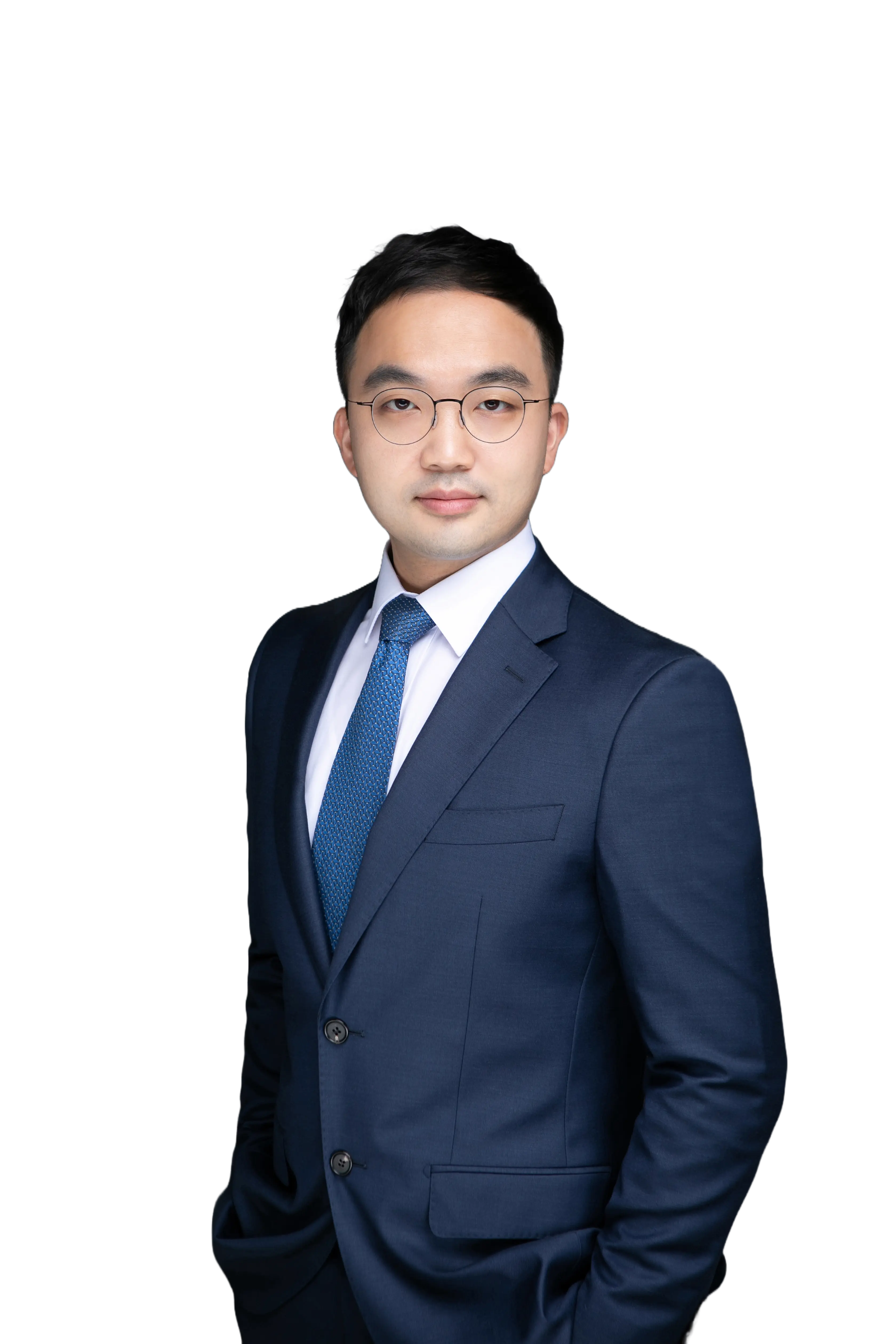
Hello, this is Attorney Lee Young-kyung of Cheongchul Law Firm.
On October 13, 2026, the Korea Fair Trade Commission (KFTC) announced its decision to impose corrective orders and surcharges totaling KRW 102 million on ten school uniform dealers (hereinafter “Dealers A through J”) that had agreed in advance on the designated winner or the bid prices in 51 uniform procurement tenders issued by 19 middle and high schools in three regions (Giheung and Cheoin in Yongin, Ulsan, and Yeongcheon). The case shows that even small businesses with annual sales of around KRW 200 to 900 million per store are sanctioned for bid rigging when they set a rotation for local tenders through in-person meetings, text messages, or KakaoTalk. Cheongchul Law Firm is made up of antitrust specialists who have both represented the KFTC in having the lawfulness of its decisions upheld in court and represented numerous companies in bid-rigging investigations, hearings, and litigation. This column is based on the KFTC press release dated October 13, 2026, and the dealers are anonymized as Dealers A through J.
Summary of the Decision – Prior Agreement on Designated Winners and Bid Prices
Under the ‘school-led purchasing system’, in which the school principal selects the uniform supplier through a tender, the ten dealers agreed on the designated winner and bid prices in order to prevent low-price awards, secure volume, or avoid failed tenders. The KFTC found this to be bid rigging in violation of Monopoly Regulation and Fair Trade Act Article 40(1)8 (공정거래법 제40조 제1항 제8호) and imposed corrective orders (cease-and-desist orders) and surcharges.
● Scope: 51 school uniform procurement tenders issued by 19 middle and high schools in 3 regions
● Respondents: 10 school uniform dealers (Dealers A through J)
● Method of agreement: in-person meetings, text messages, KakaoTalk
● Applicable provision: Monopoly Regulation and Fair Trade Act Article 40(1)8 (공정거래법 제40조 제1항 제8호) (bid rigging)
● Sanctions: corrective orders plus surcharges totaling KRW 102 million (KRW 72 million for Yongin Cheoin, KRW 9 million for Ulsan, KRW 21 million for Yeongcheon; corrective orders only for Yongin Giheung)
● Going forward: monitoring and ex officio investigations by linking uniform tender data to the Bid Rigging Indicator Analysis System (BRIAS)
1. The School-Led Uniform Purchasing System and Market Characteristics
Uniform procurement tenders are run by the schools themselves. Each year the council of metropolitan and provincial offices of education publishes a price ceiling; within that ceiling, the school selects a supplier through a combined specification-and-price tender and signs a unit-price contract, because the number of incoming students is not yet fixed when the notice is issued. Specifications are submitted by dealers who visit the school in person with uniform samples, while price bids are placed electronically on the Korea ON-line E-Procurement System (Nara Jangteo). In each region, several dealers operate and take part together in the tenders of nearby schools, and with the school-age population declining and enrollment per school shrinking, the market is prone to intense price competition.
2. Four Regional Collusion Cases
Yongin Cheoin-gu – Text Messages Listing the Schools It Wanted to Win (4 dealers)
Dealer A and three other dealers agreed on the designated winner and bid prices in 15 tenders from 8 schools between September 2022 and October 2025. Dealer A, a long-established business, asked other dealers to submit cover bids in 2022 to avoid a failed tender, and from 2023 it sent a text message every July or August listing the schools it wanted to win and asking for cooperation. The other dealers went along, and in some tenders they also agreed on bid prices, winning contracts at an average of 98.29% of the estimated price. The four dealers were fined a total of KRW 72 million.
Yongin Giheung-gu – Cover Bid Requested to Avoid a Failed Single-Bidder Tender (2 dealers)
In a single middle school uniform tender in August 2025, Dealer E, which had previously supplied the school, phoned Dealer F to request a cover bid and shared its bid price so that the tender would not fail for lack of competing bids. Both dealers received corrective orders.
Ulsan Nam-gu – KakaoTalk Agreement Born of Personal Acquaintance (2 dealers)
The owners of Dealers G and H had come to know each other while working at another business, and that acquaintance became the starting point of the collusion. From September 2022 to November 2024, they used KakaoTalk to decide the designated winner and bid prices for each school across 6 tenders at 6 schools, and were fined a total of KRW 9 million.
Yeongcheon, Gyeongbuk – A ‘Winner Rotation’ Sustained for 7 Years (2 dealers)
Dealers I and J carried out their agreement in 29 tenders at 4 schools from October 2018 to December 2025. Their owners met at a uniform sample briefing in 2018 and, reasoning that there were only two brand dealers in the area, agreed to avoid competition and split the schools between them, operating a rotation in which the dealer that lost the previous tender for a school would win the next one. Even after a change of owner, the new owner who was told of the arrangement carried it on, and from 2019 the scope was widened to four schools. They were fined a total of KRW 21 million.
3. Relevant Law – Monopoly Regulation and Fair Trade Act Article 40(1)8 (공정거래법 제40조 제1항 제8호)
Monopoly Regulation and Fair Trade Act (「독점규제 및 공정거래에 관한 법률」) Article 40 (Prohibition of Unfair Collaborative Acts) |
|---|
4. Key Takeaways
① Small and Local Businesses Are No Exception
The sanctioned dealers had 2024 sales of between KRW 240 million and KRW 900 million. Bid rigging is sanctioned just the same however small the local market, and surcharges are calculated on the basis of relevant sales.
② Text and KakaoTalk Records Are the Key Evidence
The text messages listing the schools a dealer wanted to win and the contents of the KakaoTalk agreements were presented as the basis for establishing the violation. Even ‘casual’ contact that relies on personal acquaintance can become evidence of an agreement.
③ The Agreement Survives a Change of Owner
In the Yeongcheon case, the new owner continued the agreement after the change of ownership, and this was reflected in a violation period of more than 7 years. Existing practices need to be reviewed at the time of any acquisition or succession.
④ Ex Officio Investigations Have Become More Likely
Since May 2026, the KFTC has worked with 16 metropolitan and provincial offices of education to link uniform tender data to the Bid Rigging Indicator Analysis System (BRIAS), and through the April 2026 amendment of its surcharge notice it decided to raise the floor of the base imposition rate and to aggravate penalties for repeat collusion. The KFTC has sanctioned 52 school uniform bid-rigging cases nationwide since 2010, and in August 2026 it asked five uniform manufacturers to provide compliance training and checks for their dealers.
5. Self-Check List for Businesses Participating in Local Tenders
Type of Check | Check Point | Management Direction |
|---|---|---|
① Contact with competing dealers | Have you ever discussed allocating schools or prices with a competing dealer before a tender? | Review records of tender-related contact; stop any discussion of prices or awards immediately |
② Requests for cover bids or non-bidding | Have you ever asked for, or been asked for, a cover bid or a no-bid on the grounds of avoiding a failed tender? | Refuse such requests and keep a record; follow the re-notice procedure if a tender fails |
③ Rotation and custom | Is there a long-standing custom such as ‘the one that lost last time wins next time’? | Check handover practices on a change of owner or acquisition, then stop them |
④ Head office and manufacturer training | Are you receiving compliance training and checks from your franchisor or manufacturer? | Keep records of head office training completed; cooperate with checks |
⑤ Responding to investigations | Do you have a designated person and procedure for responding to an investigation notice or on-site inspection? | Do not delete mobile phone messages; set up a system to contact a lawyer immediately |
6. Frequently Asked Questions (FAQ)
Q1. I only submitted a cover bid because I was asked to help avoid a failed tender. Am I liable?
Yes, you may be. In the Yongin Giheung-gu case, the dealer that accepted the request to submit a cover bid received a corrective order along with the designated winner. The mere fact that you were asked does not exempt you from liability.
Q2. If I delete the text messages or KakaoTalk chats, does the evidence disappear?
No. Records may remain on the other party’s phone or on servers, and deleting materials during an investigation can bring separate consequences such as obstruction of investigation. Do not delete anything; consult a lawyer first.
Q3. If the surcharge is small, is there little to worry about?
The surcharges in this case ranged from KRW 3 million to KRW 39 million per dealer, but they come together with a corrective order, the risk of publication, the possibility of a request to restrict eligibility for public tenders, and aggravation for repeat offenses. Because the KFTC has amended its notice to raise the surcharge floor and aggravate repeat collusion, the burden will be heavier if the same conduct is detected again.
Q4. I have already taken part in an agreement. What should I do now?
Stop the agreement immediately, preserve the relevant materials, and review with a lawyer whether a voluntary report (leniency) is available and what response strategy to take. The earlier you act before an investigation begins, the more options you have.
7. Cheongchul Law Firm’s Bid-Rigging Investigation Defense and Advisory Services
Cheongchul Law Firm is made up of antitrust and bid-rigging specialists who have both represented the Korea Fair Trade Commission in having the lawfulness of its decisions upheld and represented numerous companies in KFTC investigations, hearings, and litigation. In the bid-rigging field we provide the following services.
● Self-review of tender participation history and establishment of a collusion compliance manual
● Response to KFTC on-site investigations and examiner’s reports, and representation at hearings
● Representation in actions to revoke corrective orders and surcharge decisions
● Bid-rigging training for franchise and dealership businesses
The smaller and more local the market, the more easily an ‘old custom’ turns into collusion. Businesses that need a review of their tender participation history or help responding to an investigation notice are welcome to contact Cheongchul Law Firm.
Related work cases that are good to see together


서울 강남구 테헤란로 403 리치타워 7층
Tel. 02-6959-9936
Fax. 02-6959-9967
cheongchul@cheongchul.com
개인정보처리방침
면책공고
© 2025. Cheongchul. All rights reserved