


1. Introduction
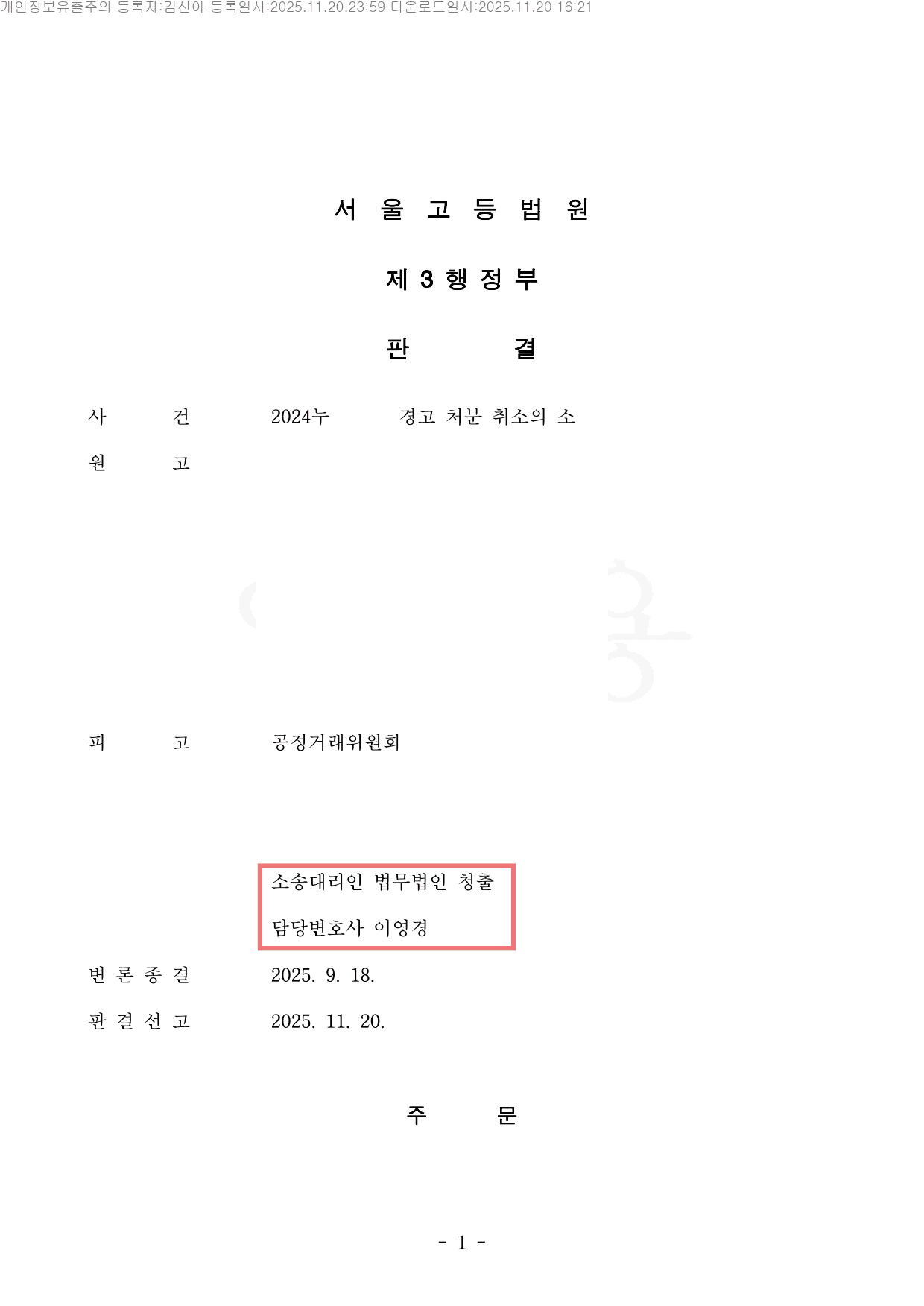
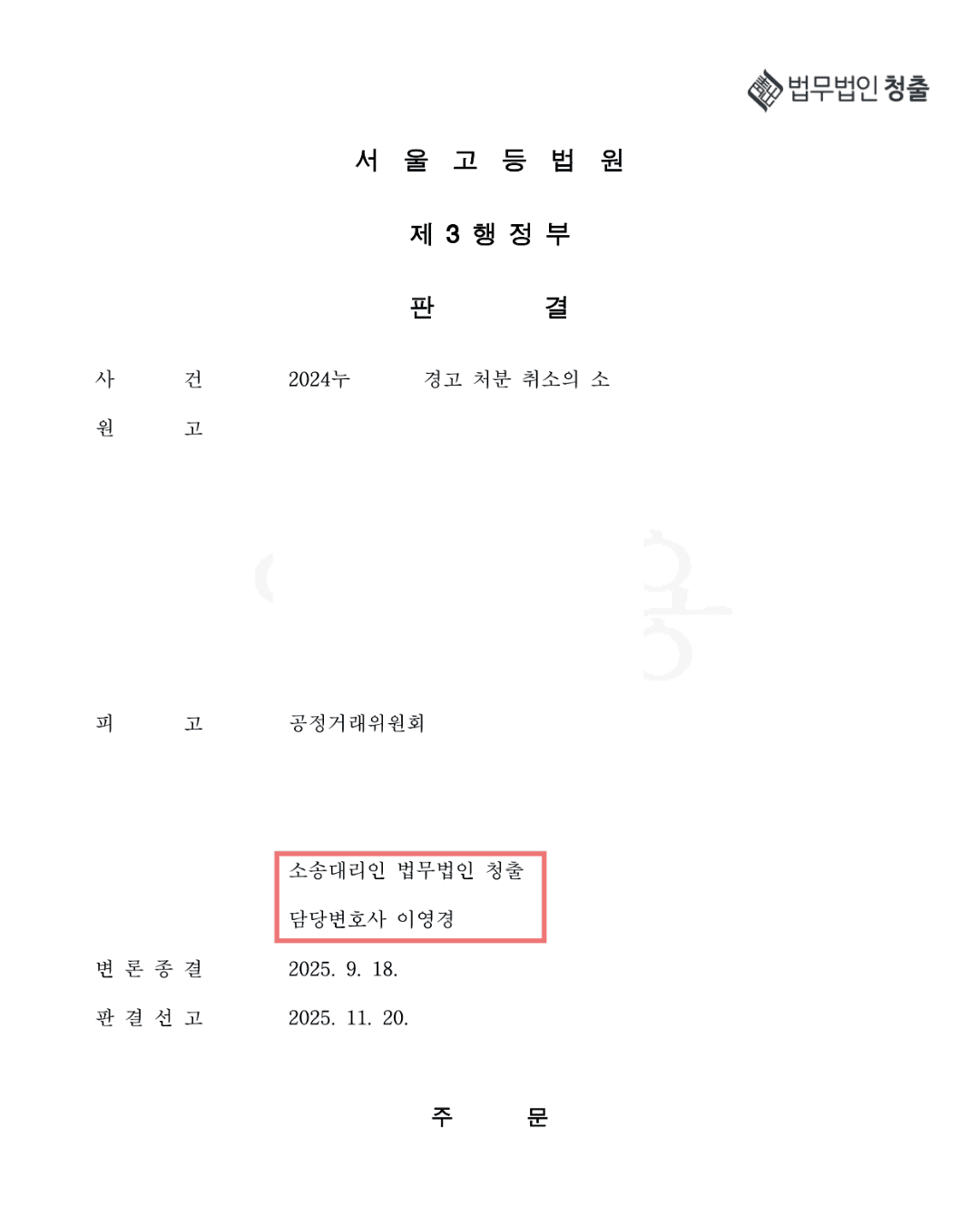
The law firm Cheongchul (attorneys: Lee Young-kyung, Eom Sang-yun) represented the respondent, the Fair Trade Commission (hereinafter "FTC"), in a case where the plaintiff, a major seller of infant cushions in Korea, received a warning from the FTC for violating the "Act on Fair Labeling and Advertising" (hereinafter referred to as "Advertising Act") due to false and exaggerated advertisements, and subsequently filed an administrative litigation to annul the decision. The law firm successfully led the court to reject all claims of the plaintiff and won the case in full (dismissal and rejection of the plaintiff's claims).
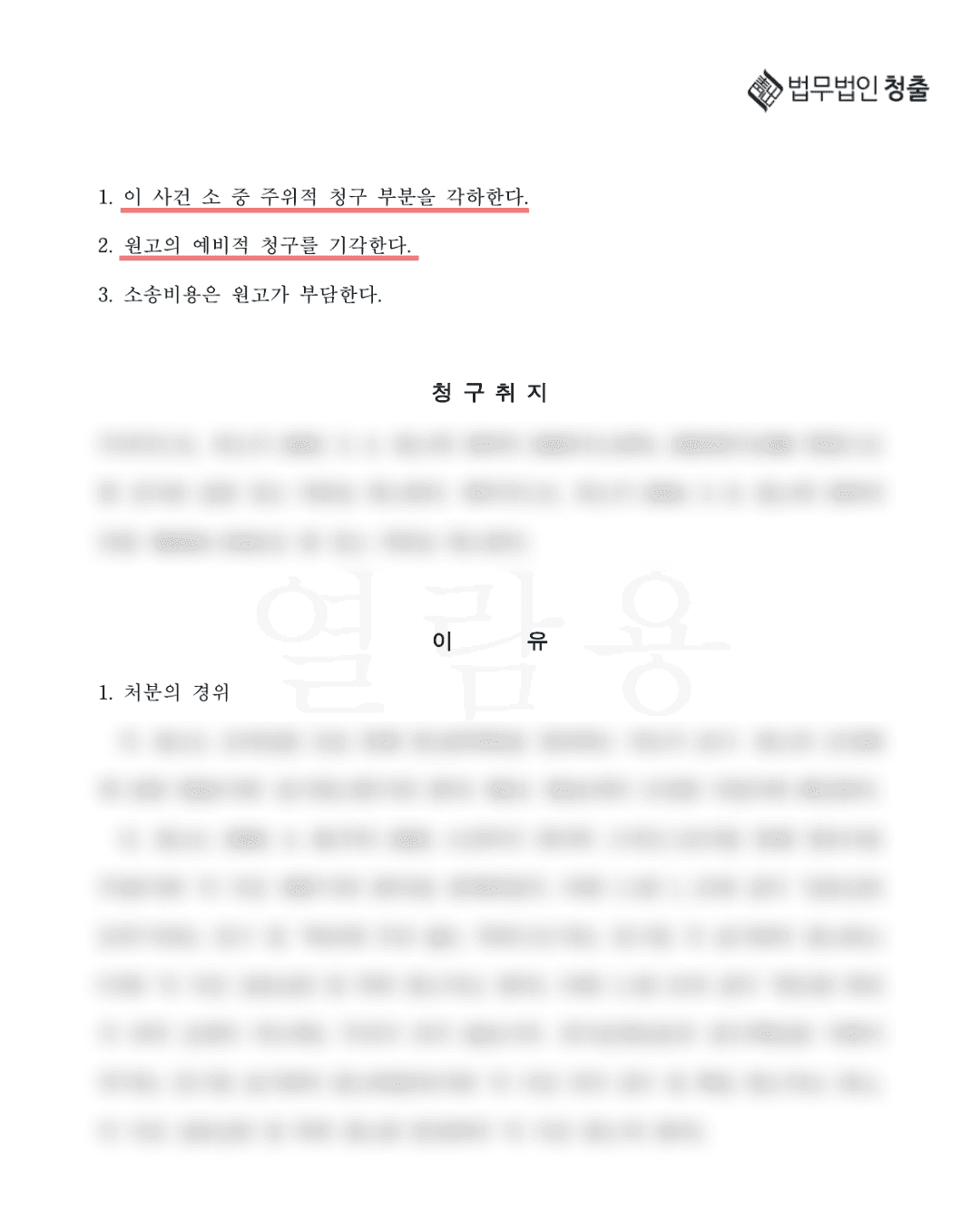
In this case, the plaintiff argued that their advertisements did not constitute false and exaggerated advertisements under the Advertising Act, and filed a lawsuit to annul both the investigator's warning and the decision. However, Cheongchul obtained a dismissal ruling on the plaintiff's warning from the investigator by making legal arguments regarding the relationship between the warning and the decision, and established that the plaintiff's advertisement was indeed a false and exaggerated advertisement, leading to a rejection ruling on the request for annulling the warning.
2. Background of the Case
The plaintiff (seller of infant cushions) advertised from around 2020 to 2022 through major platform stores, including the phrases "Registered Utility Model" and "Patent structure without burden on OO," and also included the phrase "Confirmed by doctors" in their advertisements.
The FTC noted that at the time of this advertisement, there was no registered utility model or patent regarding the product in question, and the plaintiff used the phrases "Registered Utility Model" or "Patent structure without burden on OO" to advertise the product. Despite the lack of verification or confirmation by doctors regarding the advantages presented by the plaintiff, the plaintiff advertised with the phrase "Confirmed by doctors," which led to a conclusion that the advertisement was false and exaggerated, potentially misleading consumers and hindering fair trade. However, considering that the advertisement was voluntarily rectified, the FTC took action by issuing a warning.
The plaintiff disputed this and sought a review, leading the FTC to conclude that the advertisement constituted false and exaggerated advertising and thus issued a warning.
The plaintiff then filed a lawsuit against the FTC to annul both the investigator's warning and the decision.
3. Legal Issues (Main Arguments and Issues of Cheongchul)
The core issues in this case are: (i) what the subject of the annulment lawsuit is when a decision follows an investigator's warning, and (ii) the meaning of false and exaggerated advertising under the Advertising Act and the significance of 'evidence.'
a. Regarding the First Issue, the law firm Cheongchul strongly argued that the claim for annulment of the investigator's warning by the plaintiff lacks legal interest and is thus improper.
According to Article 16 of the Advertising Act, Article 101 of the Fair Trade Act, and related provisions such as the Rules of Procedure for Cases, the handling procedure for violations of the law by the FTC progresses through three administrative stages: (i) Investigation (ii) Review (iii) Decision. The investigation is handled by the investigator, who, after reviewing whether there is a violation of the law, prepares an investigation report and submits the case to the committee or takes other actions (termination of review procedures, no charges, concluding treatment, suspension of investigation, warnings, corrective recommendations, etc.) as stipulated in Article 25, paragraph 1 of the Rules of Procedure for Cases (Article 61, paragraph 1). A respondent who receives a warning as an additional action from the investigator may request a review regarding the violation, and in this case, the investigator must prepare a report for submission to the subcommittee. The handling procedure for the case must follow the procedure for resuming review mandated by the Rules of Procedure for Cases (Article 61, paragraph 7).
The Seoul High Court accepted Cheongchul's argument and determined that considering the above procedure, an investigator's warning is a type of provisional disposition that anticipates the final decision by the FTC, and therefore, when the final decision is made, it absorbs and eliminates the warning. Thus, the court concluded that a claim to annul the investigator's warning, even with a decision warning present, is improper as it requests annulment of a measure that has already lost its effect.
b. Regarding the Second Issue, the law firm Cheongchul emphasized and argued that the advertisement in question constitutes false and exaggerated advertising under the Advertising Act and also fails to meet the conditions for ‘evidence.’
According to Article 3, paragraph 1, subparagraph 1 of the Advertising Act and Article 3, paragraph 1 of the Enforcement Decree of the same Act, false and exaggerated advertisements refer to advertising that misleads consumers or gives rise to the risk of being misunderstood by advertising facts inaccurately or exaggerating facts excessively. Average consumers form an overall ultimate impression by considering not only the directly expressed sentences, words, designs, images, sounds, or their combinations presented in the advertisement but also the details indirectly suggested in the advertisement, customary and typical situations, etc. Therefore, whether an advertisement misleads consumers or leads them to misunderstand is to be objectively determined based on the overall ultimate impression received by an ordinary consumer with usual attention (refer to Supreme Court ruling 2017. 4. 7. 2014du1925).
In this regard, Articles 5, paragraph 1 of the Advertising Act and Article 4, paragraph 1 of its Enforcement Decree state that business operators must be able to provide evidence regarding matters related to facts in their advertisements, and the methods used for evidence must be objective and valid methods generally accepted academically or in the industry, and trials or investigations must be conducted by testing or investigation agencies that operate independently from the business operators.
The plaintiff's proposed ‘evidence’ did not meet the criteria for methods generally recognized academically or in the industry, and did not comply with the guidelines for verification of advertising set by the Fair Trade Commission.
As a result, the Seoul High Court accepted Cheongchul's argument and dismissed the plaintiff's claim for annulment of the warning decision.
4. Significance (Meaning of the Case)
The FTC, following the Supreme Court ruling, has determined that the consumer misleadingness of false and exaggerated advertising under the Advertising Act is judged based on the overall ultimate impression that an average consumer with ordinary attention has regarding the advertisement, reaffirming the legality of this determination.
Additionally, although there was no clear judgment regarding the relationship between the investigator's warning and the warning decision procedurally, this ruling clarified the legal relationship between the two warnings through a court ruling, marking a significant precedent in the enforcement of the Fair Trade Act and the Advertising Act.
 |  |
The law firm Cheongchul is composed exclusively of attorneys from Korea's top five law firms, prosecutors, and in-house legal teams of large corporations. Each case is handled by a team of specialized attorneys in related fields rather than a single attorney. Cheongchul does not only resolve specific issues but provides comprehensive solutions for the entire business, focusing on achieving the ultimate goals of the clients. If you need assistance in achieving your goals, please do not hesitate to contact Cheongchul.
Related work cases that are good to see together
Corporate advisory · Dispute
AI · Emerging Business
[Consultation] Advice on improper inducement of personnel under the Fair Trade Act
Fair Trade
[Lawsuit] Cancellation lawsuit for the fine on furniture manufacturers' collusion, completely won on behalf of the Fair Trade Commission.
Fair Trade
[Fair Trade] Special Price Furniture Collusion Case Disposition Cancellation Lawsuit Victory
Fair Trade
[Fair Trade] Victory in the first case of bid-rigging for residential waste collection services on behalf of the Fair Trade Commission.


서울 강남구 테헤란로 403 리치타워 7층
Tel. 02-6959-9936
Fax. 02-6959-9967
cheongchul@cheongchul.com
개인정보처리방침
면책공고
© 2025. Cheongchul. All rights reserved