
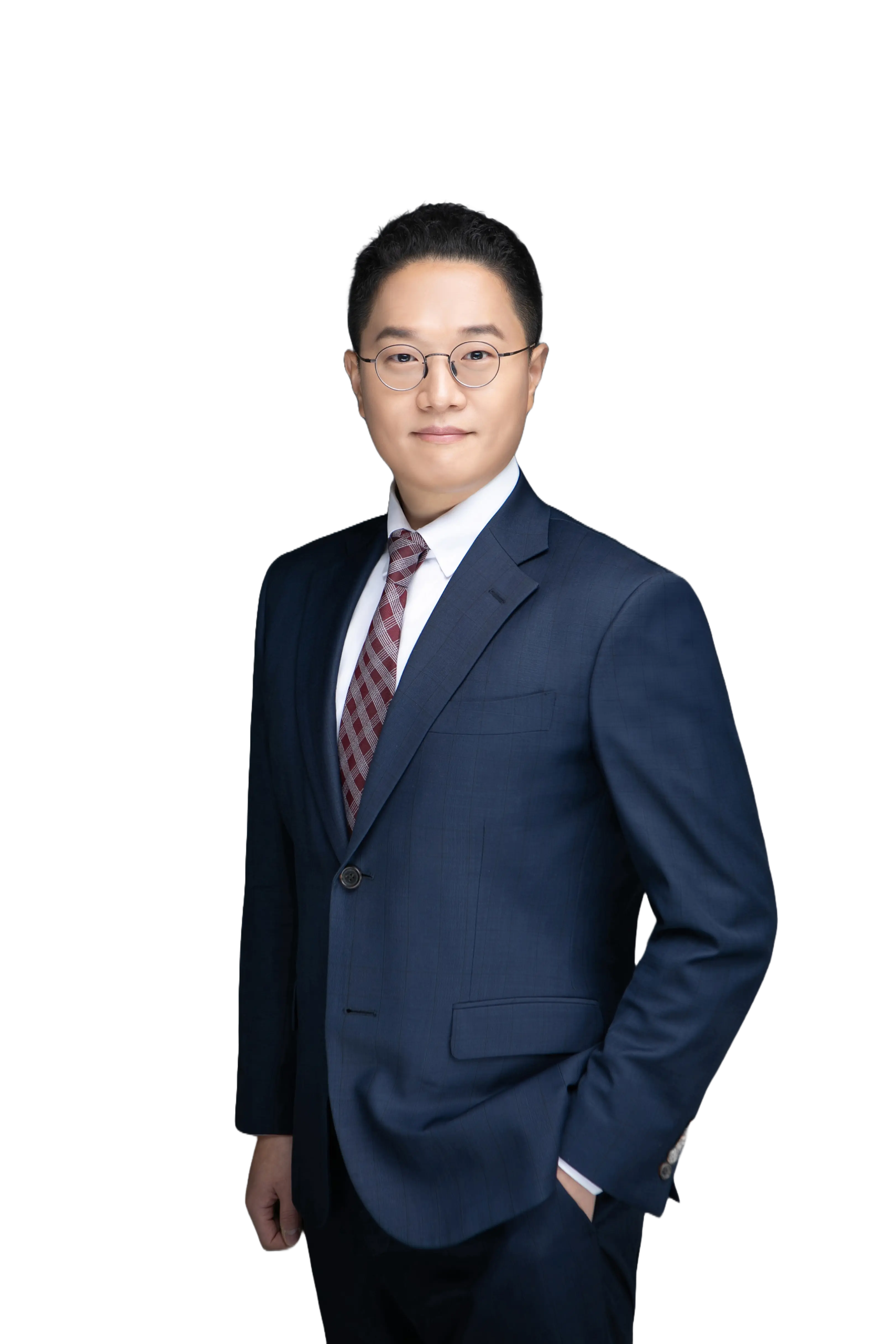
Hello, this is attorney Kim Kwang-sik of Cheongchul Law Firm.
In 2021 Shin Chul-ho, CEO of OGQ, raised KRW 9 billion from an investment firm to acquire Getty Images Korea. When the acquisition fell through, the investor demanded repayment not from the company but from Mr Shin personally — because he had signed the contract alongside the company as an ‘interested party’.
In April 2026 the Supreme Court dismissed the appeal, finally fixing Mr Shin with a personal debt of roughly KRW 12 billion: the KRW 9 billion principal plus delay damages reported at 12% per annum (the exact dates of the first and second instance judgments are not confirmed in published reports). Some eight months later, on 28 August 2026, Mr Shin announced that he had received a ‘capital reduction consent’ from the investment firm — whose limited partners include KB Securities and Hana Securities — and that a settlement resolving the matter through a differential paid-in capital reduction was progressing.
Taking this case as our starting point, we explain what an ‘interested party’ clause in an investment agreement is and how it differs from a joint and several guarantee, why the court recognised Mr Shin’s personal repayment liability, how the differential capital reduction resolves the problem, how the recently amended venture investment legislation and standard form agreement seek to prevent such situations, and what founders and investors should check in their contracts.
[Question] I merely signed the investment agreement as an ‘interested party’ alongside the company — must I as founder personally repay the investment the company owes? How did the OGQ case turn a KRW 9 billion investment into a KRW 12 billion personal debt, and how was it resolved?
[Answer]
1. How the case unfolded — from a KRW 9 billion investment to a confirmed KRW 12 billion personal debt
In 2021, pursuing the acquisition of Getty Images Korea to expand his image platform business, Mr Shin raised KRW 9 billion from an investment firm. The investment agreement had three parties: the investor, the company OGQ, and Mr Shin personally as an ‘interested party’. It provided that if the acquisition failed, the company or the interested party would repay the investment. Reports indicate that the repayment obligation was triggered by a notice of closing given in June 2022.
The investor then sued Mr Shin personally, rather than the company, for repayment. The proceedings appear to have begun around December 2023 (the delay damages were reported as running from 6 December 2023) and became final in April 2026 when the Supreme Court dismissed the appeal (the exact dates of the first and second instance judgments are not confirmed in published reports). Mr Shin was left carrying a personal debt of roughly KRW 12 billion — the KRW 9 billion principal plus delay damages reported at 12% per annum.
▶ Card summary Having signed as an ‘interested party’ alongside the company, Mr Shin ended litigation that ran to a final Supreme Court decision in April 2026 with a confirmed personal debt of about KRW 12 billion.
2. What is an ‘interested party’ clause — and how does it differ from a joint guarantee?
A ‘joint and several guarantee’ is an obligation the guarantor assumes under a separate guarantee contract distinct from the principal debt, and the words ‘joint guarantee’ normally appear in the document. The ‘interested party’ clause, by contrast, draws the founder personally into the contract as a party in their own right, alongside the company, without any such guarantee wording. The founder is not a guarantor but a contracting party who personally undertakes the obligations set out in the agreement — repayment, representations and warranties, penalty payments — either together with the company or in its place.
The difficulty is that, because the phrase ‘joint guarantee’ is absent, many founders treat the risk lightly when signing. Yet whether the clause creates an independent joint obligation separate from the company, or merely a guarantee ancillary to the company’s debt (an obligation with the character of accessoriness), is a question of contractual interpretation that weighs the wording and mode of signature, and whether other clauses use the term ‘joint guarantee’ separately. Where someone is recorded as an interested party and signs to bear the debt ‘jointly and severally’ with the company, the clause is likely to be read as an independent joint obligation, in which case liability follows the wording regardless of the arrangement with the company.
▶ Card summary Whether an ‘interested party’ clause is an independent joint obligation or an ancillary guarantee is a matter of interpretation based on wording and signature. Signing to bear the debt ‘jointly and severally’ points strongly to an independent obligation.
3. Why the court recognised personal liability — separating shareholder equality and rejecting accessoriness
The court’s reasoning rested not on bare ‘freedom of contract’ but on separating the layers of liability. An agreement by a company guaranteeing a particular investor the recovery of its principal may be void as contrary to the principle of shareholder equality. That principle, however, governs only the relationship ‘between shareholders and the company’, so the personal repayment agreement between Mr Shin (the interested party) and the investment partnership was held valid independently of the arrangement with the company.
Mr Shin argued that his liability was merely a guarantee ancillary to the company’s debt, but the court rejected this, holding that even if the validity of the company’s repayment undertaking were problematic, his own independent repayment obligation would not automatically be void. With delay damages reported at 12% per annum, the KRW 9 billion principal swelled to roughly KRW 12 billion. Although venture investment is by nature premised on the risk of failure, the case sounded a loud warning to the startup industry that a single contractual line can translate into heavy personal liability for a founder.
▶ Card summary The court separated the personal repayment agreement from the company’s arrangement on the basis that shareholder equality governs only shareholder–company relations, and rejected the argument that the founder’s liability was merely accessory.
4. Resolution through a differential paid-in capital reduction — the structure of the pending settlement
Some eight months after the Supreme Court decision, on 28 August 2026, Mr Shin announced that he had received a ‘capital reduction consent’ from the investor and that a settlement resolving repayment through a differential paid-in capital reduction was progressing. According to reports, the reduction targets the OGQ shares held by the investor: the company acquires and cancels them at a fair value of about KRW 9.425 billion, returning an amount equivalent to the principal. The shortfall of about KRW 2.37 billion accrued as interest is said to be borne separately by Mr Shin, secured on his personal shareholding. This remains a stage of advancing settlement, however, and is not yet fully concluded.
A paid-in capital reduction is a procedure by which a company pays consideration to shareholders and purchases and cancels their shares; in principle it requires a special resolution of the general meeting and creditor protection procedures (Articles 438 and 439 of the Commercial Act). Where the reduction is ‘differential’ — targeting only particular shareholders — obtaining the consent of the remaining shareholders is the safer course in view of the shareholder equality principle, and case law treats the consent rate as an important factor. Such consent is not an absolute requirement, however, and conversely a structure that effectively guarantees absolute recovery of invested capital may be held void even with unanimous shareholder consent.
▶ Card summary The reduction targets the investor’s shares, which the company acquires and cancels at fair value (about KRW 9.4 billion) to return the principal. The interest shortfall (about KRW 2.4 billion) is borne separately by Mr Shin against his shareholding, and the settlement is still in progress.
5. The institutional response — amended Venture Investment Promotion Act and a fully revised standard agreement
The risk of personal founder liability seen in the OGQ case has been criticised as an industry-wide problem. The Act on Special Measures for the Promotion of Venture Investment, as amended on 30 December 2025, accordingly prohibits in principle arrangements under which a third party such as a founder assumes the investee company’s obligations jointly and severally, permitting them only in exceptional cases where the third party acted with intent or gross negligence as to serious matters such as breach of conditions precedent, false representations and warranties, misuse of funds, or disposal of interested-party shares. On 30 June 2026 the Ministry of SMEs and Startups and the Korea Venture Investment Corporation then fully revised the ‘standard venture investment agreement’ for the first time in three years to reflect that legislative intent, softening the IPO clause from an obligation of result compelling listing into an obligation of best efforts and confining the scope of joint liability of founders and third parties to the statutory grounds above coupled with intent or gross negligence.
An important caveat is that neither the amendment nor the revised standard agreement retroactively invalidates investment contracts already concluded. These are regulations governing the conduct of investment institutions and intended to improve contracting practice, so a breach of the conduct restrictions does not by itself void a personal repayment agreement already validly formed. The OGQ investment agreement dates from 2021, before these reforms, and founders who have already entered into contracts containing interested-party or joint liability clauses should recognise that they remain exposed to personal liability regardless of the changes.
▶ Card summary The restriction on third-party joint liability came with the December 2025 amendment, and the fully revised standard agreement followed in June 2026. Neither applies retroactively, so risk remains under existing contracts.
6. What founders and investors should check
Before signing, a founder should go clause by clause to confirm exactly which obligations they assume as an ‘interested party’ or under a similar label. Repayment obligations, representations and warranties, and penalty clauses differ in legal character, so it is essential to identify precisely which events (a failed M&A, a breach of representations, and so on) crystallise a personal payment obligation, and where possible to negotiate limits confining liability to specified grounds or a cap. Ancillary terms such as the delay damages rate also deserve attention from the negotiation stage, since protracted litigation can push them well beyond the principal.
From the investor’s side, confirming how the amended Act’s restrictions on third-party joint liability apply to new contracts, and designing the structure in line with the revised standard agreement, helps prevent disputes and secure the contract’s effectiveness. For founders and investors alike, the case shows what a single line of contractual language can produce.
▶ Card summary Founders should check who bears which obligations under the ‘interested party’ clause, what triggers them and at what delay interest rate, and negotiate caps; investors should design contracts reflecting the amended law and standard agreement.
The OGQ case shows that the moment a founder signs an investment agreement as an ‘interested party’ alongside the company, the wording and mode of signature may cause the company’s debt to be read as the founder’s own independent obligation. The absence of the words ‘joint guarantee’ is no comfort, and defences that work at company level — such as shareholder equality — may not carry across to personal liability. Recent legal reform points toward reducing this risk, but because it does not apply retroactively, review before signing remains the surest safeguard.
Cheongchul Law Firm advises across the full range of venture investment contracting: reviewing and negotiating investment and shareholders’ agreements at the fundraising stage, diagnosing the risks in interested-party, joint liability and repayment clauses, advising on compliance with the Venture Investment Promotion Act and the revised standard agreement, and, where a dispute has already arisen through a failed M&A or otherwise, handling the litigation and advising on debt restructuring through mechanisms such as a differential capital reduction. Please contact us whenever you need an investment agreement reviewed or a related dispute handled.
Related work cases that are good to see together


서울 강남구 테헤란로 403 리치타워 7층
Tel. 02-6959-9936
Fax. 02-6959-9967
cheongchul@cheongchul.com
개인정보처리방침
면책공고
© 2025. Cheongchul. All rights reserved