
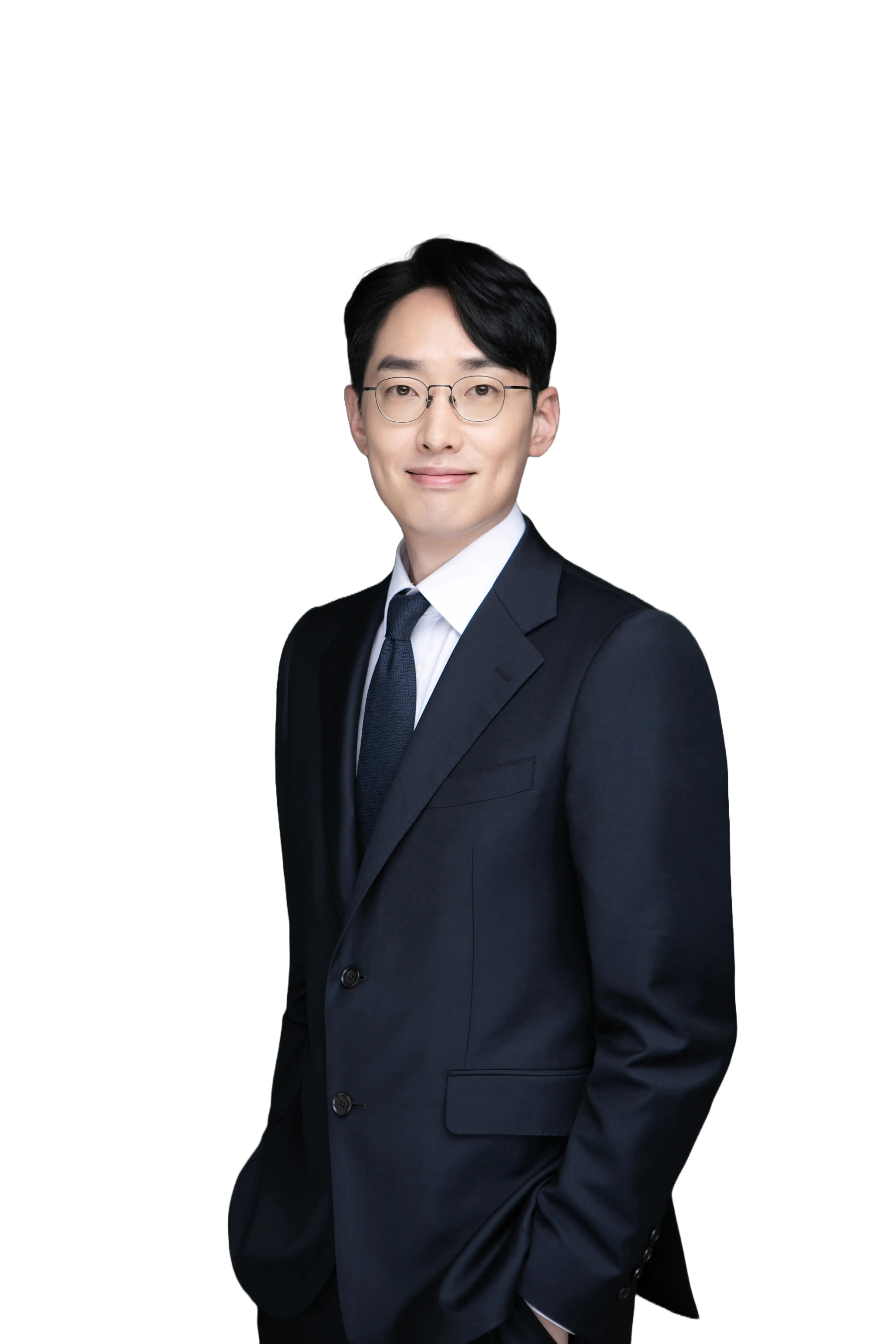
Hello, I am Attorney Baek Gi-hyeong from Cheongchul Law Firm.
Real estate development is indeed complicated. There are numerous stages such as issues in securing land, obtaining permits related to development, financing for project costs related to PF loans and affiliated trusts, changes in design during the construction process, and extensions of project timelines. Many parties are involved in each of these processes, and many legal relationships are formed as a result. In some cases, these legal relationships may become intertwined and conflict with each other.
The topic I want to discuss today is also about a case where the legal relationships of various parties collide.
A subcontractor (the contractor) can directly invoice the client for subcontractor payments according to the Act on Fair Subcontracting (hereinafter referred to as 'Subcontracting Act'). However, since clients typically conclude a trust agreement with the contractor (the main contractor) that specifies the payment conditions for work, they can argue that the payment conditions in the trust agreement must still be upheld regarding the subcontractor's direct claim.
[Question]
Can the client counter the subcontractor's direct payment request based on the order of fund disbursement stipulated in the trust agreement?
[Answer]
The Supreme Court stated, "Since Company B, which is the main contractor and a party to the aforementioned trust agreement, trust contract, and succession contract, has agreed to claim the project payments according to the order of fund disbursement under the project trust agreement with Company C and others, Company C can refuse payment based on the order of fund disbursement when Company B claims the project payments, and the project payment receivables under the Subcontracting Act, which the client, Company C, is obligated to pay directly, are transferred to the subcontractor, Company Jeong, while maintaining their identity, and Company C shall bear the direct payment obligation within the extent that it does not incur new burdens. Therefore, it can also counter Company Jeong’s direct claims on the same ground." (Supreme Court ruling 2023. 6. 29. 2023da221830).
The aforementioned ruling concerns the case where Company A, the project implementer in a construction project, and Company B, the construction company, entered into a construction contract and then signed a trust business agreement, a management-type land trust contract, and succession contract regarding the construction contract with Company C, the trustee, stating that "90% of the construction cost shall be paid in 7th order every 2 months, and the remaining construction cost shall be paid in 13th order after all principal and interest of the priority beneficiaries in the 1st, 2nd, and 3rd order have been paid off and the trustee's processing fee has been settled, and the land trust business agreement and the management land trust contract shall take precedence over the succession contract." Subsequently, Company B, which subcontracted part of the construction work to Company Jeong, concluded a direct payment agreement with Company C and Company Jeong, stating that "the scope of the construction payment burden borne by Company C should not exceed the scope of the construction payment obligation that Company C must pay to Company B under the construction contract between Company C and Company B, and Company C can counter Company Jeong for reasons such as the possibility of countering against Company B before a direct payment request is made." This was the case where, after more than 90% of the construction cost had been paid, Company Jeong requested direct payment of subcontracting fees from Company C, citing that a certain period had passed since the building was completed.
In response, the lower court (the second instance) concluded that Company C was unable to counter Company Jeong based on the order of trust fund disbursement, and even if it were possible to counter based on the self-funding disbursement order, it judged that Company C could not prove that the disbursement order had not yet occurred since it was uncertain in nature.
However, the Supreme Court judged that the direct payment request under the Subcontracting Act presupposes that the claim of the main contractor against the client is "transferred while maintaining its identity," and based on this existing legal principle, it reached the conclusion that the conditions defined in the trust contract between the client and the main contractor (the contractor) should still apply.
Furthermore, the Supreme Court noted that the agreement regarding the order of fund disbursement seems to be an understanding between the parties, sharing risks due to the potential success or failure of the project, and stated, "Even if a certain period has passed after the completion of the building carried out under this business project, allowing the disbursement from trust funds regardless of the order of disbursement cannot correspond to the intention of the parties involved in the trust agreement, and based on the principle of not paying later-ranking claims unless there are special circumstances in a state where funds for priority claims have not been executed, it should be interpreted that the nature of the order of fund disbursement is a suspensive condition." Therefore, the nature of the order of fund disbursement in the trust agreement should be deemed a suspensive condition.
Additionally, in a legal act under a suspensive condition, the party wishing to acquire rights has the burden of proof regarding whether the condition has been fulfilled. Thus, it was judged in this case that the subcontractor (the contractor), Company Jeong, must demonstrate that the condition regarding the order of fund disbursement has been fulfilled, completely overturning the lower court's decision.
Through the aforementioned Supreme Court ruling, it has become clear that when a subcontractor makes a direct payment claim, it must adhere to the limitations of the order of fund disbursement in the trust agreement, especially in a management-type land trust contract.
However, if there is an agreement on direct payment under the Subcontracting Law, the subcontractor's right to claim direct payment from the client arises, and at the same time, the main contractor's payment obligation towards the client will be extinguished to the extent of the area covered by the subcontracting payments when a direct payment request is made, resulting in the main contractor's rights over the project payment claims being transferred to the subcontractor (See Supreme Court ruling 2014. 11. 13. 2009da67351), thus if a direct payment agreement is hastily reached, it may place the subcontractor (the main contractor) in a disadvantageous position by being subject to the restrictions of the order of fund disbursement, rather than claiming against them.
Therefore, from the subcontractor's perspective, it is essential to carefully consider whether to opt for direct payment agreements, keeping this Supreme Court ruling in mind.
Attorney Baek Gi-hyeong has worked with the Defense Facilities Agency and a major law firm's construction/real estate team, specializing in real estate development projects, finance, trusts, and litigation and consulting related to construction projects. Real estate development and trust and construction disputes often involve a more diverse set of legal relationships and legal principles than one might expect. If any related issues arise, please feel free to contact us at any time.
Cheongchul Law Firm is composed of attorneys from Korea's four major law firms: Kim & Chang, Bae, Kim & Lee, Lee & Ko, and Shin & Kim, and instead of just one attorney, a team of specialized attorneys related to the case is formed to respond. Cheongchul provides legal consulting that focuses not just on resolving specific issues but on providing comprehensive solutions for the entire business, ultimately aiming to achieve what the client desires. If you need help in achieving your goals, please contact Cheongchul without hesitation.
Related work cases that are good to see together


서울 강남구 테헤란로 403 리치타워 7층
Tel. 02-6959-9936
Fax. 02-6959-9967
cheongchul@cheongchul.com
개인정보처리방침
면책공고
© 2025. Cheongchul. All rights reserved