![[상속 변호사] 한정승인 임대차 연장은 관리행위(2025다220329)](https://framerusercontent.com/images/zcgDZyDx66zaVOVELo8cD9Nz5M.png?width=1080&height=1350)
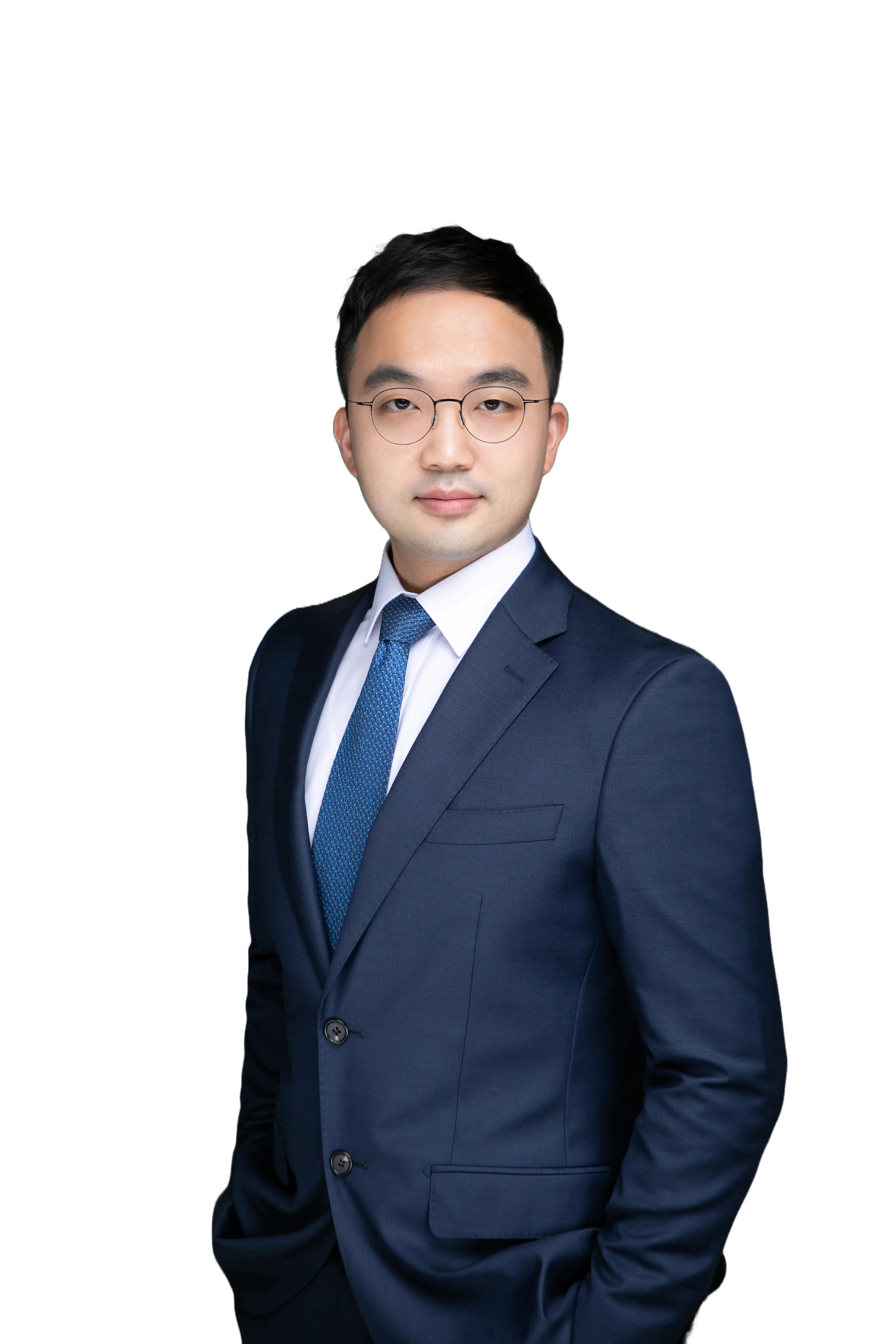
Hello, this is attorney Lee Young-kyung of Cheongchul Law Firm.
Today we examine the Supreme Court’s decision in case 2025Da220329 (lease deposit), rendered on May 8, 2026. The case concerned whether an heir who had filed for limited acceptance (“qualified acceptance”) of the inheritance and then signed a new lease agreement — on terms identical to the existing lease, extending only the term by two years to enable the tenant to renew a jeonse (lease deposit) loan — performed a “disposition of inherited property” under Article 1026(1) of the Civil Code that triggers statutory simple acceptance. The Supreme Court held that this was not a disposition but rather an “act of management of inherited property” under Article 1022 of the Civil Code, and reversed and remanded the lower judgment — a ruling of major significance for limited-acceptance practice.
[Question] Is a Limited-Acceptance Heir’s Lease Renewal Deemed Simple Acceptance?
Where the tenant under a lease in which the decedent had been the landlord requested the co-heirs to execute a lease for an additional two-year term in order to renew a jeonse loan, and the co-heirs (including an heir who had filed for limited acceptance) signed a new lease on the same deposit, rent, and premises as before, does that act constitute a “disposition of inherited property” under Article 1026(1) of the Civil Code and thus a statutory simple acceptance?
[Answer] It Is Not a “Disposition” but an “Act of Management of Inherited Property”
The Supreme Court held that signing such a lease extension — given that it was done in response to the tenant’s request to enable renewal of a jeonse loan — was not a “disposition of inherited property,” but rather an act performed in discharge of the heir’s duty to manage inherited property under Article 1022 of the Civil Code, i.e., an “act of management.” On that basis, the Court found that the lower court had erred in its understanding of Article 1026(1) of the Civil Code by deeming the heir to have made a statutory simple acceptance and thereby denying the effect of limited acceptance, and it reversed and remanded the lower judgment.
1. Facts — Landlord’s Death, Limited Acceptance, and Lease Renewal
On March 27, 2020, the plaintiff entered into a lease with the deceased (non-party 1) for a property owned by the deceased, with a deposit of KRW 160 million and a term running from May 11, 2020 to May 10, 2022 (the “existing lease”). The deceased died on June 4, 2020, leaving his spouse (non-party 2) and his children (including the defendant) as heirs. On May 4, 2022, the defendant filed for limited acceptance with the Seoul Family Court, which was accepted on April 7, 2023. On May 5, 2022, the plaintiff entered into a new lease (the “subject lease”) with the defendant and the other co-heirs for the same property and the same deposit, extending only the term by two years. The special provisions expressly stated that it was “a two-year extension of the contract of March 27, 2020 on identical terms” (Article 6), that “the heirs assume the position of landlord, take over the lease deposit as is, and extend the term” (Article 7), and that “the landlords acknowledge and cooperate with the tenant’s renewal of the jeonse loan” (Article 8).
2. Issue and Applicable Law — Civil Code Article 1026(1) vs. Article 1022
The issue was whether a limited-acceptance heir’s execution of a new lease extending only the term, on terms identical to the decedent’s existing lease, constitutes a “disposition” under Article 1026(1) of the Civil Code (a ground for statutory simple acceptance) or an “act of management of inherited property” under Article 1022 of the Civil Code.
■ Civil Code Article 1026 (Statutory Simple Acceptance): The heir shall be deemed to have made simple acceptance in any of the following cases. ■ Civil Code Article 1022 (Management of Inherited Property): The heir shall manage inherited property with the same degree of care as he or she manages his or her own property. |
3. The Lower Court’s Holding — “Disposition” Found; Simple Acceptance Deemed
The lower court (Seoul Southern District Court, judgment of November 28, 2025, case 2025Na52246) held that, by signing the subject lease, the defendant had expressed an intention to assume, as the defendant’s own personal liability, the existing inherited debt or a new lease-deposit refund obligation; that this constituted a disposition of inherited property; and that, under Article 1026(1) of the Civil Code, the defendant must be deemed to have made simple acceptance.
4. The Supreme Court’s Holding — “Act of Management”; Lower Judgment Reversed and Remanded
A. The Legal Distinction Between “Disposition” and “Act of Management”
The Supreme Court held that the “disposition” under Article 1026(1) of the Civil Code includes both factual acts that alter the current state or nature of property and juristic acts that bring about a change in property, but does not include acts of preservation or management of inherited property (citing Supreme Court judgment of June 23, 2015, case 2014Da50913).
B. Application — The Lease Renewal Is an “Act of Management”
The Supreme Court found, on the basis of the following circumstances, that the lower court’s characterization of the execution of the subject lease as a “disposition” could not be accepted: (i) the subject lease involved identical premises, deposit, and rent, with only the term extended by two years, and its special provisions expressly stated that it was a “renewal,” on “identical contractual terms,” with the “deposit taken over as is”; (ii) the plaintiff had sent text messages to the defendant stating in substance that “because the loan is maturing, either return of the deposit or a renewal contract is required — only then can the loan be renewed”; (iii) the plaintiff himself acknowledged that, in order to renew the jeonse loan, the lending bank required a lease agreement in which the co-heirs were named as landlords; and (iv) Article 8 of the special provisions itself stated that the landlords would cooperate with renewal of the tenant’s jeonse loan.
Ultimately, the co-heirs’ execution of the subject lease can only be seen as a response to the tenant’s request to enable renewal of the jeonse loan, and cannot be regarded as a manifestation of intent on the defendant’s part to make simple acceptance of the inheritance, nor to assume the lease-deposit refund obligation as the defendant’s own personal liability. To the contrary, treating it as a ground for statutory simple acceptance and thereby permitting enforcement against the defendant’s own property would risk undermining the purpose of the limited-acceptance system and of Article 1026(1) of the Civil Code. Accordingly, the Supreme Court held that the execution of the subject lease was an “act of management of inherited property” under Article 1022 of the Civil Code, and reversed and remanded the portion of the lower judgment in which the defendant had lost.
5. Implications — Points to Note for Limited-Acceptance Heirs Renewing a Lease
The Supreme Court’s decision in case 2025Da220329 sets out a practical standard for how limited-acceptance heirs should handle lease agreements. Where a lease extension on identical deposit, rent, and premises — extending only the term — is shown to have been signed in response to the tenant’s needs (such as renewal of a jeonse loan), it may be characterized as an “act of management,” not a “disposition of inherited property.” However, the decisive bases for that assessment were objective materials — the special-provision language (“renewal,” “identical contractual terms,” “deposit taken over as is,” “cooperation with the jeonse loan”), the tenant’s text messages, and a real-estate broker’s factual confirmation. A limited-acceptance heir facing a similar situation should therefore be diligent in drafting special provisions that clearly characterize the lease extension as an act of management and in securing and preserving evidence that establishes the surrounding circumstances.
Related work cases that are good to see together


서울 강남구 테헤란로 403 리치타워 7층
Tel. 02-6959-9936
Fax. 02-6959-9967
cheongchul@cheongchul.com
개인정보처리방침
면책공고
© 2025. Cheongchul. All rights reserved