
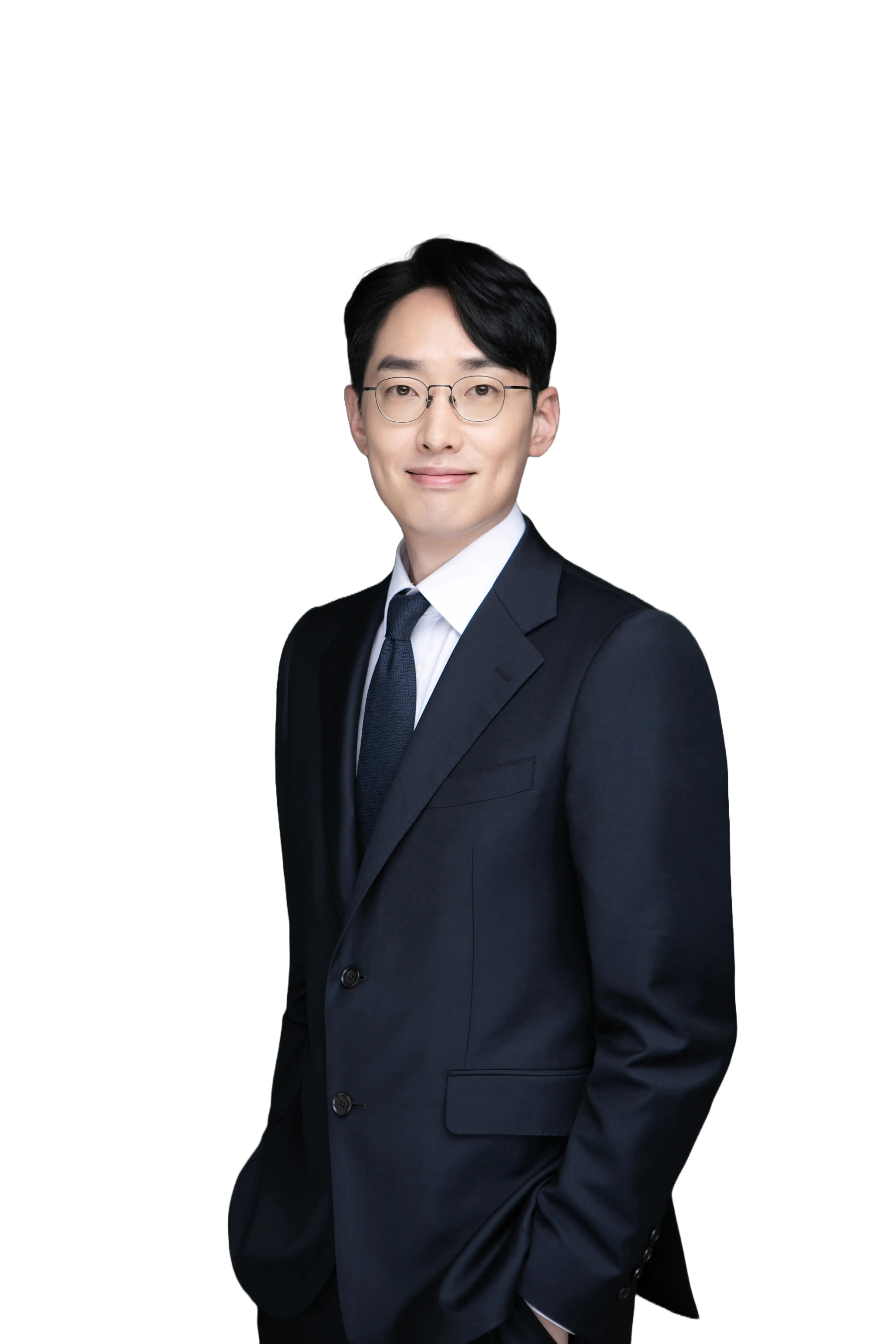
Hello, this is attorney Kihyung Bae of Cheongchul Law Firm.
When buying a new apartment unit under a pre-sale, most buyers decide whether to sign based on glossy catalogs, sales brochures, and beautifully furnished model houses (show homes). Yet when move-in time arrives and they visit the finished apartment, it is not uncommon to find that the premium finishes, landscaping, or exterior design shown in the brochure or model house have been omitted or replaced with cheaper materials.
Residents then demand repairs, arguing that "anything different from the sales advertisement is clearly a defect." The developer or contractor counters that "advertisements and model houses are merely reference materials to aid consumer understanding (an invitation to treat), and we built lawfully according to the finally approved as-built drawings, so there is no defect." Fierce legal disputes follow.
Today I will explain the Supreme Court's clear criteria on what requirements the content of sales advertisements, catalogs, or model houses must satisfy to be incorporated into the sales contract and recognized as a "subjective defect" for which the builder can be held liable.
Incorporating Sales Ads and Model Houses into the Contract – The Supreme Court's Criteria
[Question] If the structure or finishes shown in the sales catalog or model house are missing from the actual apartment or built differently, can this be treated as a defect and can we claim repair costs or damages?
[Answer] In conclusion, if special circumstances are proven showing that the content of the sales advertisement or model house went beyond a mere "invitation to treat" and was incorporated into the sales contract, it can be recognized as a "defect" and damages can be claimed, even if the building was constructed according to the final as-built drawings.
As a general rule, the content of sales advertisements for commercial or residential buildings is merely an invitation to treat (an act of enticing someone to enter a contract) and has no legal binding force by itself. However, considering the special nature of large-scale apartment pre-sales, which proceed on a sell-first, build-later basis, the Supreme Court has affirmed the incorporation of advertisement content into the contract under certain requirements.
On this point, the Supreme Court Decision of June 1, 2007, Case Nos. 2005Da5812, 5829, 5836 (대법원 2007. 6. 1. 선고 2005다5812, 5829, 5836 판결) set out the following clear criteria.
1. Implied Agreement on Specific Transaction Terms (Requirements for Incorporation)
The Supreme Court held: "Even if the content of sales advertisements, the conditions of the model house, or the explanations the sales company gave the buyer at the time of contracting are invitations to treat, insofar as they concern specific transaction terms, that is, matters concerning the apartment's exterior, materials, and the like, which by social norms the buyer could reasonably demand the seller perform as part of the contract, buyers are deemed to have relied on them in entering the sales contract, and sellers are deemed to have known this." Accordingly, unless the developer expressly reserved an objection at the time of contracting by stating that "the actual product may differ from the advertisement," specific matters in the advertisement concerning the apartment's exterior or materials are deemed to have been impliedly agreed between the seller and the buyer and incorporated into the sales contract.
2. Exceptions Depending on the Sales Method (Build-First, Sell-Later, etc.)
One caveat is that the outcome may differ depending on the sales method. The Supreme Court Decision of November 13, 2014, Case No. 2012Da29601 (대법원 2014. 11. 13. 선고 2012다29601 판결) rules differently where the apartment was sold on a build-first, sell-later basis, or where, although originally planned as a pre-sale, the sale in fact took place "after completion." In such cases, the buyer can inspect the exterior and materials of the completed apartment with their own eyes before deciding whether to contract, so the completed apartment itself becomes the subject matter of the contract. Therefore, even if the exterior or materials depicted in the earlier sales advertisement differ from the completed building, they are not incorporated into the contract and no defect is recognized, unless the sales company separately promised at the time of contracting to "rebuild in accordance with the advertisement."
3. Distinguishing the Liability of the Contractor and the Developer
Another critically important practical issue is "who should be held liable." The party bound by incorporation through sales advertisements is, in all cases, the "developer (seller)," the party to the sales contract. A "contractor (builder)" that merely undertook the construction work is not at fault for the construction itself if it faithfully built according to the design drawings approved by the competent authority, absent special circumstances such as knowing that the drawings were inappropriate and failing to disclose it (see Supreme Court Decision of May 14, 1996, Case No. 95Da24975 (대법원 1996. 5. 14. 선고 95다24975 판결)). Accordingly, even if buyers (or the council of occupants' representatives) subrogate the developer and sue the contractor for damages on the ground that "the building differs from the sales advertisement, so take responsibility," such liability is difficult to establish unless the contractor also holds the status of seller.
Practical Points – Proving Specific Transaction Terms and Identifying the Liable Party Are Key
From the standpoint of the council of occupants' representatives or the buyers, in order to frame the parts built differently from the catalog or model house as defects, it is a threshold priority to thoroughly collect the sales brochures, catalogs, model house photographs, and explanatory materials distributed at the time, and to actively prove that the content was not a mere rendering or abstract puffery but a "specific transaction term" specifying particular finishes, materials, or dimensions of the apartment.
Conversely, developers and contractors must defend against unjustified defect repair cost claims by proving that the advertised content was excluded by special provisions in the sales contract, or that it was reflected in the as-built drawings through lawful design change approval procedures.
Defect litigation over whether sales advertisements were incorporated into the contract is an area where extensive analysis of sales materials intersects with difficult legal judgments on whether the content constitutes specific transaction terms, so concrete legal review is necessary from the earliest stage of the dispute.
Cheongchul Law Firm, drawing on its deep understanding of large-scale multi-unit housing defect disputes and the law of sales contracts, provides optimal solutions for obtaining fair compensation for improperly built apartment defects and for defending against unjust disputes. If you are facing defect issues caused by construction that differs from the sales advertisement, please consult the professionals at Cheongchul Law Firm.
-------
Attorney Kihyung Bae has worked at the Defense Installations Agency and in the construction and real estate team of a major law firm, providing legal advice on every stage of government contracts and construction projects, including large-scale construction works such as public works, defense facility projects, and SOC (social overhead capital) construction projects, and has extensive experience and skill in resolving related litigation. Please feel free to contact him whenever you need assistance with public works, private construction projects, public procurement contracts, state property, local government property, or public property.
* * *
Cheongchul Law Firm is composed exclusively of attorneys from Korea's top five major law firms, the prosecution, and in-house legal teams of large corporations, and responds not with a single attorney but with a team of specialized attorneys in the fields relevant to each case. Going beyond resolving specific issues, Cheongchul provides comprehensive solutions across the entire business, offering legal consulting focused on ultimately achieving what clients want. If you need help reaching your goals, please do not hesitate to contact Cheongchul.
Related work cases that are good to see together


서울 강남구 테헤란로 403 리치타워 7층
Tel. 02-6959-9936
Fax. 02-6959-9967
cheongchul@cheongchul.com
개인정보처리방침
면책공고
© 2025. Cheongchul. All rights reserved