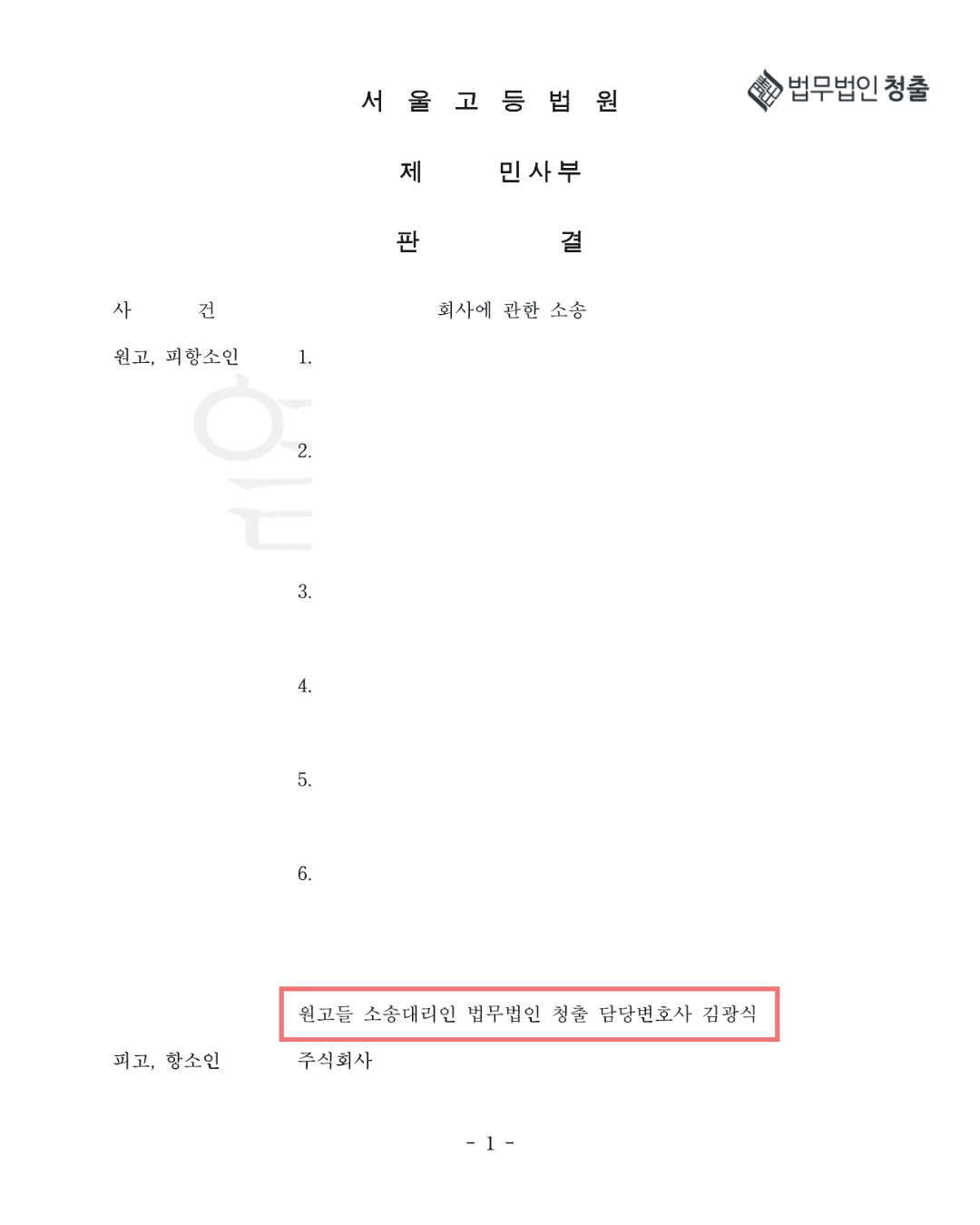

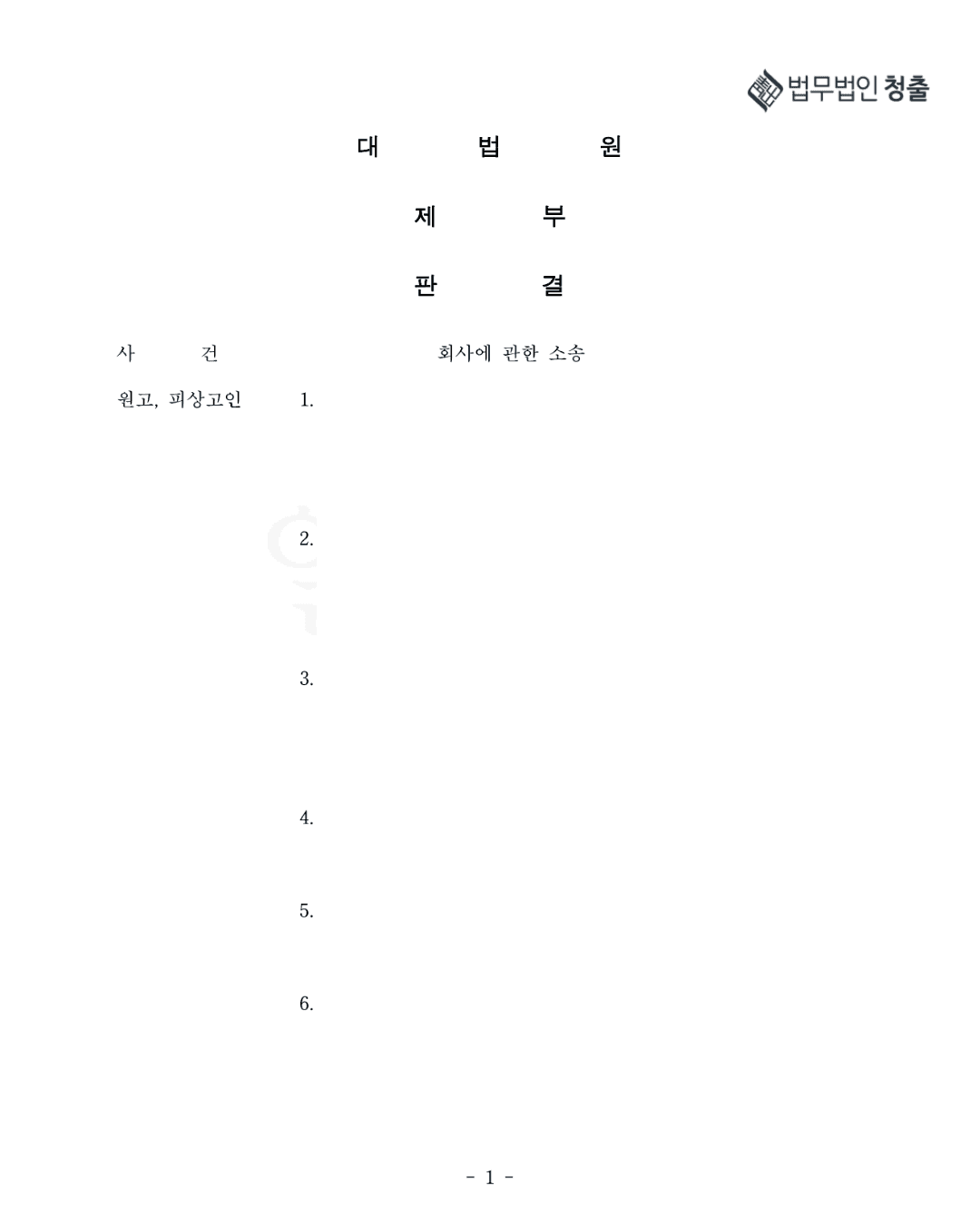
Law Firm Cheongchul (Attorney in Charge: Kim Kwang-sik) represented clients who are minority shareholders of unlisted companies affiliated with large corporations and successfully led to a Supreme Court ruling in a lawsuit demanding access to the company's accounting records.
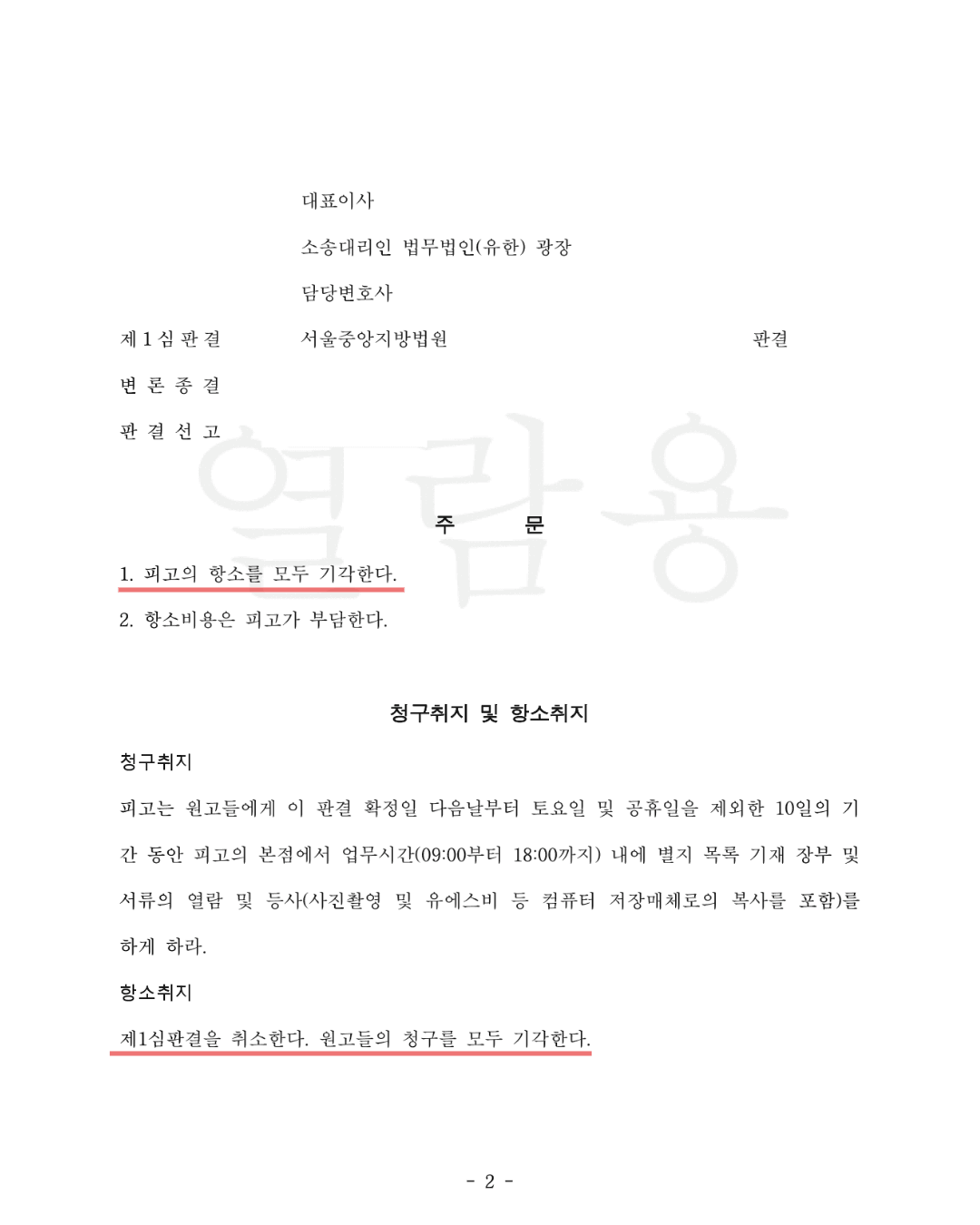
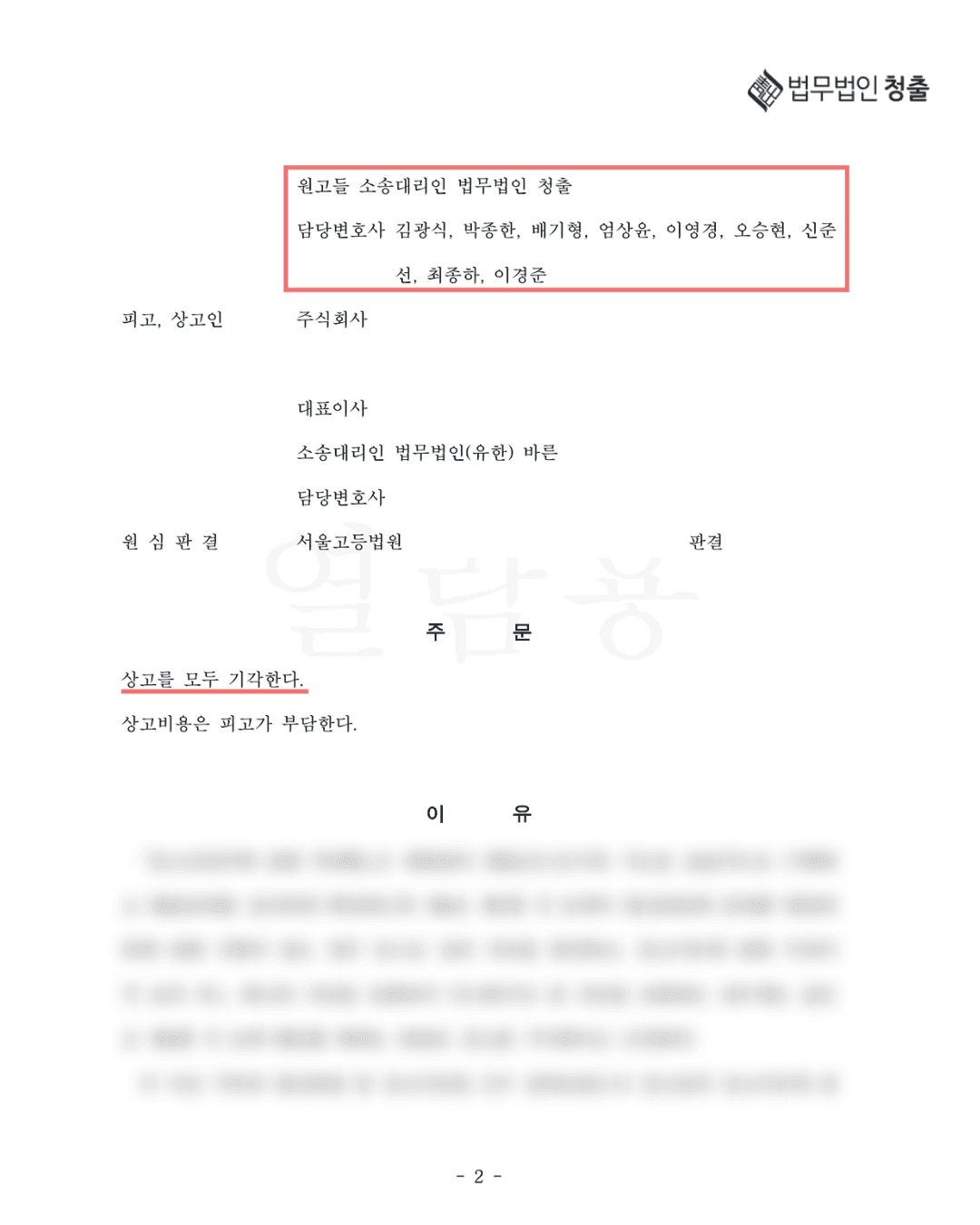
In this case, the defendant company retained the domestic large law firms, Law Firm (Limited) Gwangjang (2nd trial) and Law Firm (Limited) Bareun (3rd trial), arguing strongly with logic such as, 'Documents like corporate card usage details do not fall under the accounting documents requested for access,' but the court accepted the plaintiff's claims and made a ruling allowing access to all requested items (including detailed corporate card usage).
1. Background of the Case
The plaintiffs, who are clients, were shareholders holding more than 3% of the total issued shares of the defendant company. While analyzing the financial statements of the defendant company, the plaintiffs discovered an abnormal trend where, despite the declining operating profit of the company, expenditures such as employee welfare costs were sharply increasing.
In particular, as the management of the defendant company was composed of people from the parent company's listed corporation, the plaintiffs became suspicious that the executives may have used corporate cards excessively or conducted unnecessary expenditures despite the deteriorating management situation.
Therefore, the plaintiffs requested to verify specific financial expenditure details by demanding access to "corporate card usage details (including date, amount, merchant, user, etc.)." However, the company claimed that the requested information was merely simple evidence, not accounting records, and refused the access, which ultimately led to a lawsuit.
2. Legal Issues (Main Grounds and Issues of Cheongchul)
Law Firm Cheongchul focused on logically rebutting the procedural and substantive defenses of the defendant during the trial process and proving the legitimacy and necessity of the access request.
a. Whether 'Corporate Card Usage Details' fall under the 'Accounting Documents' subject to access under the Commercial Act
The biggest issue was whether detailed card details were included in the access subject. The defendant argued that only accounting records (such as ledgers) are subject to access and that individual evidentiary details, like card details, are not. In response, Cheongchul argued, "Corporate card usage details are the basis for the entries in accounting records (like employee welfare costs) and documents that directly evidence accounting transactions, therefore they fall under 'accounting documents' as stated in Article 466, Paragraph 1 of the Commercial Act." The court accepted this argument and allowed access to details including specific payment information (merchant, time, etc.).
b. Proving the 'Substantial Relevance' of the Reasons for the Request and the Subject
The defendant claimed that it was merely a management judgment issue and that there was no need to see specific card details. Cheongchul emphasized that "to clarify the contradiction where operating profit decreased while employee welfare costs increased, it is insufficient to only rely on the general ledger; we must compare it with card details showing actual usage to verify the appropriateness of expenditures." The court recognized this necessity and judged that there was substantial relevance.
c. Defense against the Defendant's Claim of 'Improper Purpose'
The defendant argued that the plaintiffs had previously exercised their rights to demand shares and made frequent shareholder proposals, claiming that they had 'improper purposes (evidence collection for exploratory purposes)' in trying to pressure the company. Cheongchul presented the legal principle that "exercising the right to demand shares or shareholder proposals is a legitimate exercise of a shareholder's rights, and this does not undermine the legitimacy of the request for access to accounting records." Furthermore, Cheongchul pointed out that the burden of proving the impropriety of the request lies with the company, which the defendant failed to do. The court quoted Cheongchul's arguments, rejecting all of the defendant's defenses.
3. Significance (Meaning of This Case)
This ruling provides an important benchmark for the exercise of minority shareholders' rights ahead of the 2026 general shareholders' meeting season and the implementation of corporate value-up programs.
First, it reaffirmed legal protection against shareholder activism. It confirmed that the right to access information for management oversight should be separately guaranteed, even if shareholders are actively involved in management or in the process of demanding share purchases. This acts as a deterrent to attempts to restrict the legitimate exercise of shareholders' rights in the future.
Second, it involves strict application of the burden of proof. The mere assertion of 'trade secrets' or 'improper purposes' by the company is not sufficient to refuse access; there must be specific proof, as confirmed by this ruling.
 |  |
 |  |
Law Firm Cheongchul operates a corporate dispute team composed of attorneys from large law firms, prosecutors, and the legal departments of large corporations. They provide substantial and professional legal solutions related to access requests for accounting records, shareholder proposals, and demands for the dismissal of directors, among others, concerning corporate governance and management rights disputes.
If you need legal assistance regarding related issues, please contact Law Firm Cheongchul.
Related work cases that are good to see together
Corporate advisory · Dispute
AI · Emerging Business
[Lawsuit] Winning a trade secret infringement lawsuit on behalf of the largest domestic IT company.
Fair Trade
[Consultation] Legal advice on whether there are any violations of the Fair Trade Act related to transactions with large corporate affiliates.
Corporate advisory · Dispute
[Lawsuit] Won a case determining the stock purchase price on behalf of a large corporation.


서울 강남구 테헤란로 403 리치타워 7층
Tel. 02-6959-9936
Fax. 02-6959-9967
cheongchul@cheongchul.com
개인정보처리방침
면책공고
© 2025. Cheongchul. All rights reserved