1. Introduction
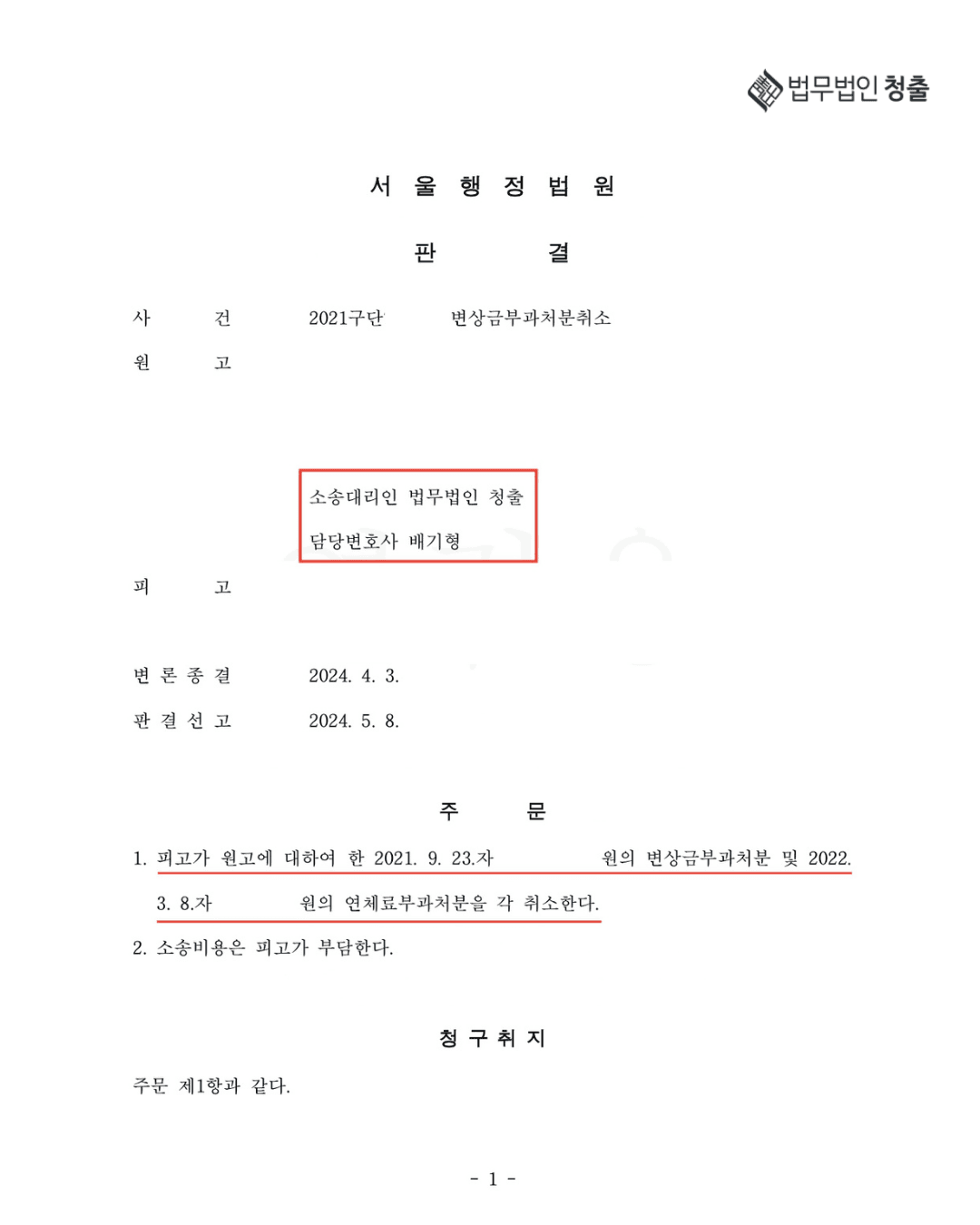
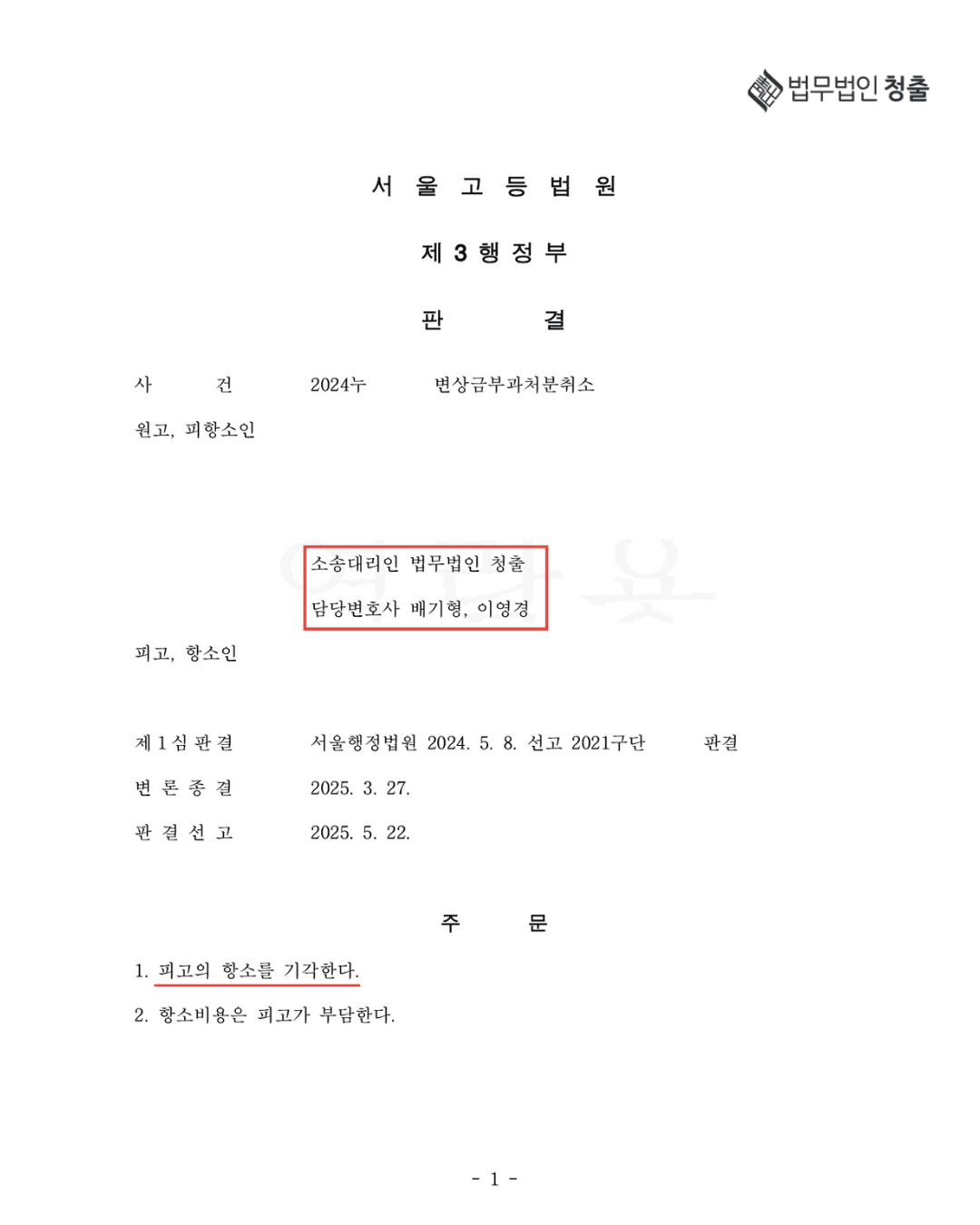
The law firm Cheongchul(Responsible Attorneys: Bae Gi-hyeong, Lee Young-kyung) received a comprehensive victory ruling in the first instance that canceled both the imposition of damages and the late fees in a case where it was alleged that the administrative agency retroactively canceled the public property usage permit based on the permit holder's violation of the usage purpose, and subsequently received a ruling in the second instance (Seoul High Court 2024Nu43807) that dismissed the defendant's appeal, resulting in a complete victory ruling.
2. Background of the Case
The plaintiff obtained a usage permit through a general competitive bidding process for public property (part of a military residential complex's commercial facility) and was in operation when they received a cancellation of the usage permit and an order for restoration (prior disposition) due to a violation of the usage purpose (intended use).
The Ministry of National Defense believed that due to the prior disposition, the public property usage permit retrospectively lost its effectiveness and calculated the period for imposing damages from the point the plaintiff violated the usage purpose to impose damages, and also imposed late fees due to unpaid damages.
In response, the plaintiff filed an administrative lawsuit seeking the cancellation of the damages and late fee imposition.
3. Legal Issues (Major Grounds and Issues of Cheongchul)
The Ministry of National Defense's argument was that 'in cases where a usage permit is canceled due to a violation of the usage purpose, the usage permit loses its effectiveness retroactively from the moment the violation occurred.'
However, the law firm Cheongchul argued and organized extensively that (i) canceling a usage permit retroactively due to a 'defect at the time of establishment of the permit' constitutes “cancellation,” while eliminating the effectiveness of the usage permit due to 'newly occurred reasons after the establishment of the permit' is a “withdrawal” with effectiveness only for the future, and (ii) the reason for the termination of the usage permit in this case (violation of usage purpose) occurred after the establishment of the permit, thus, in substance it should be regarded as a “withdrawal” despite the name, and should only recognize future effects.
As a result, the second instance court, based on the premise that the cancellation disposition by the Ministry of National Defense corresponds to a “withdrawal” that only has future effects, viewed that the imposition of damages (and late fees) based on retroactive effects was lacking in grounds and canceled all dispositions related to the imposition of damages and late fees.
5. Significance (Meaning of this Case)
The public property damages are based on “unauthorized occupiers,” and whether the administrative agency characterizes the termination of the usage permit as a legal matter (cancellation vs. withdrawal) can fundamentally change the premise for imposing damages, and particularly, the amount of damages can drastically increase or decrease.
This case clearly established in the second instance ruling that since the reason for the termination of the usage permit occurred after the permit was established, even if the administrative agency names it a “cancellation,” in substance it is viewed as a “withdrawal,” and that it is not possible to retroactively calculate and impose damages. It also confirmed in practical terms that if the premise for calculating damages collapses, related late fees must also be canceled.
The law firm Cheongchul verified the legal nature (scope of effect) and calculation structure rather than the name of the disposition, achieving a comprehensive victory ruling canceling both the imposition of damages and late fees in the second instance following the first.
 |  |
The law firm Cheongchul consists only of attorneys from the top 5 large domestic law firms, prosecutors, and corporate legal teams, where specialized attorneys related to the case form a team rather than just one attorney responding. Cheongchul provides comprehensive solutions focused not only on resolving specific issues but also on achieving what the client ultimately desires through legal consulting. If you need assistance in achieving your goals, please feel free to contact Cheongchul.


서울 강남구 테헤란로 403 리치타워 7층
Tel. 02-6959-9936
Fax. 02-6959-9967
cheongchul@cheongchul.com
개인정보처리방침
면책공고
© 2025. Cheongchul. All rights reserved