
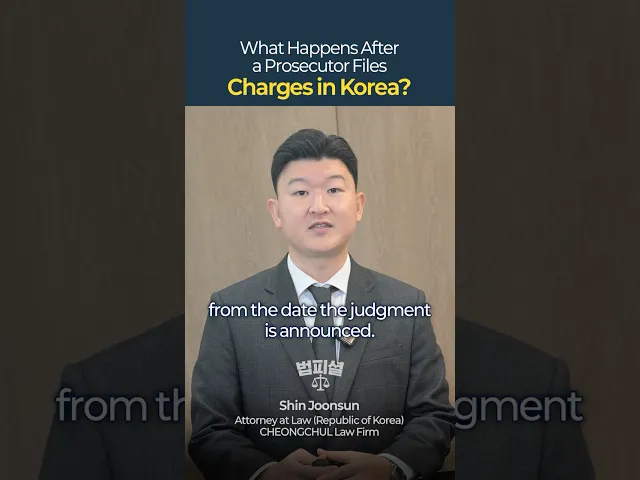
When a prosecutor in Korea decides to file charges, the case undergoes a significant transition from the investigation stage to the trial stage. Understanding the sequence of events that follows an indictment is crucial for preparing a proper legal defense. Cheongchul Law Firm provides a clear guide on what you can expect during the Korean criminal court process.
Contents & Summary
Transition to Trial: The shift from investigation to the criminal court.
Scheduling the First Hearing: Receiving court notices and expected timelines.
The Trial Process: Typical intervals between hearings and case duration.
Simplified Cases: Procedures for undisputed facts and sentencing.
Judgment and Appeals: Understanding outcomes and the strict 7-day appeal window.
1. Transition to Trial: From Investigation to Court
Once charges are officially filed by a prosecutor, the case automatically moves from the investigation stage to the trial stage before a criminal court. At this point, the focus shifts from police or prosecutorial questioning to formal arguments and evidence presentation before a judge.
2. Scheduling the First Hearing: Court Notices
After the indictment, the case is assigned to a specific criminal court, which will then schedule the first trial hearing. You will receive an official court notice informing you of the specific date and place of the trial. In practice, this first hearing usually occurs approximately one to two months after the indictment.
3. The Trial Process: Hearing Intervals
Depending on the complexity of the case, it may proceed through several hearings over the following months. Typically, there is about a one-month interval between each hearing to allow for the review of evidence and preparation of legal arguments.
4. Simplified Cases: Quick Resolutions
In simpler cases where the facts are not disputed, the court may conclude the trial in a single hearing. In such instances, the court will set a separate sentencing date shortly afterward, usually about one month after the hearing concludes.
5. Judgment and Appeals: Final Outcomes
The court will eventually issue a formal judgment, which can result in:
Acquittal (Not Guilty)
A Fine
Imprisonment
If either party (the defendant or the prosecutor) disagrees with the court's judgment, an appeal must be filed within seven days from the date the judgment is announced. Failure to act within this narrow window makes the judgment final.
Navigating the Korean criminal justice system requires strategic planning and a deep understanding of court procedures. At Cheongchul Law Firm, our experienced attorneys—including former prosecutors—are dedicated to protecting your rights and ensuring you receive a fair trial. If you are facing charges in Korea, early intervention is key to a successful outcome.
Related work cases that are good to see together


서울 강남구 테헤란로 403 리치타워 7층
Tel. 02-6959-9936
Fax. 02-6959-9967
cheongchul@cheongchul.com
개인정보처리방침
면책공고
© 2025. Cheongchul. All rights reserved