
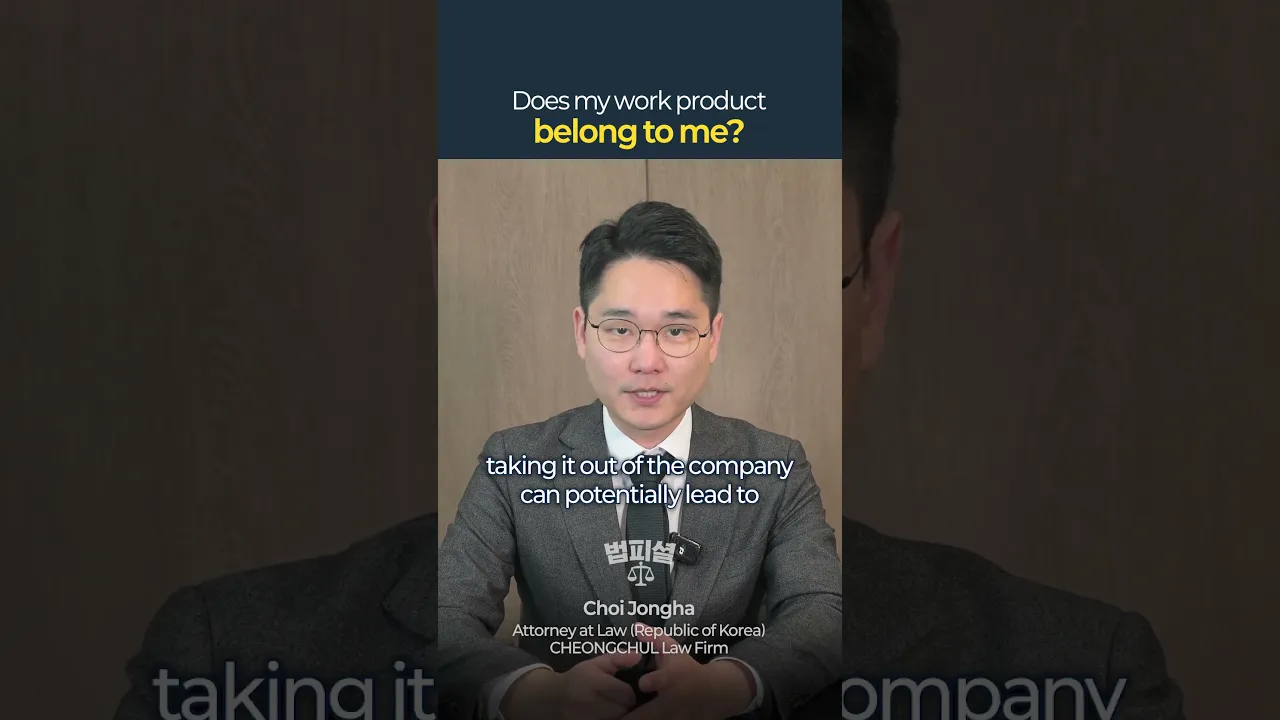
Many employees in Korea mistakenly believe that materials they created during their employment belong to them. However, taking these files as a portfolio or deleting them out of anger upon resignation can lead to severe criminal liability. In this post, Law Firm Cheongchul explains the legal risks of handling company data during the off-boarding process and why seeking legal advice is crucial to avoid a criminal record.
[Table of Contents]
Ownership of Work Product: Who Really Owns the Files?
The Danger of Taking Files: Even If It's Not a "Trade Secret"
Deleting Electronic Records: A High Risk of Criminal Charges
Conclusion: Don't Let an Emotional Decision Turn Into a Crime
Legal Consultation with Law Firm Cheongchul
1. Ownership of Work Product: Who Really Owns the Files?
It is a common misconception among professionals in Korea that "If I ground out the hours and created it, it’s mine." However, under Korean law, the default rule is that any material created as part of your job belongs to the company, not the individual employee. Using company materials for a future job or as a personal portfolio without explicit permission can be legally dangerous.
2. The Danger of Taking Files: Even If It's Not a "Trade Secret"
You might think that if the material isn't a high-level trade secret (like semiconductor patents), taking it is harmless. This is not true. If the company invested time, effort, and money into creating the material, and it was not publicly available, taking it out of the company can potentially lead to criminal charges. "Reference materials" can quickly become evidence in a criminal case.
3. Deleting Electronic Records: A High Risk of Criminal Charges
If you are fired abruptly or leave on bad terms, you might feel tempted to delete your work files from your computer before walking out. Do not do this. Korean courts have consistently held that deleting a company’s electronic records constitutes:
Destruction of Electronic Records
Interference with Business
Both are serious criminal offenses that can lead to significant penalties, regardless of whether you intend to work in Korea again.
4. Conclusion: Don't Let an Emotional Decision Turn Into a Crime
Just because you made it, it does not mean you own it. Before you copy, keep, or delete any company material, it is vital to get professional legal advice. One emotional decision during your exit can escalate into a lifelong criminal record.
5. Legal Consultation with Law Firm Cheongchul
If you are facing a dispute regarding company materials or need to review your legal risks before resigning, reach out to Law Firm Cheongchul. We provide strategic solutions to protect your career and your future. Please contact us for a consultation.
Related work cases that are good to see together


서울 강남구 테헤란로 403 리치타워 7층
Tel. 02-6959-9936
Fax. 02-6959-9967
cheongchul@cheongchul.com
개인정보처리방침
면책공고
© 2025. Cheongchul. All rights reserved