
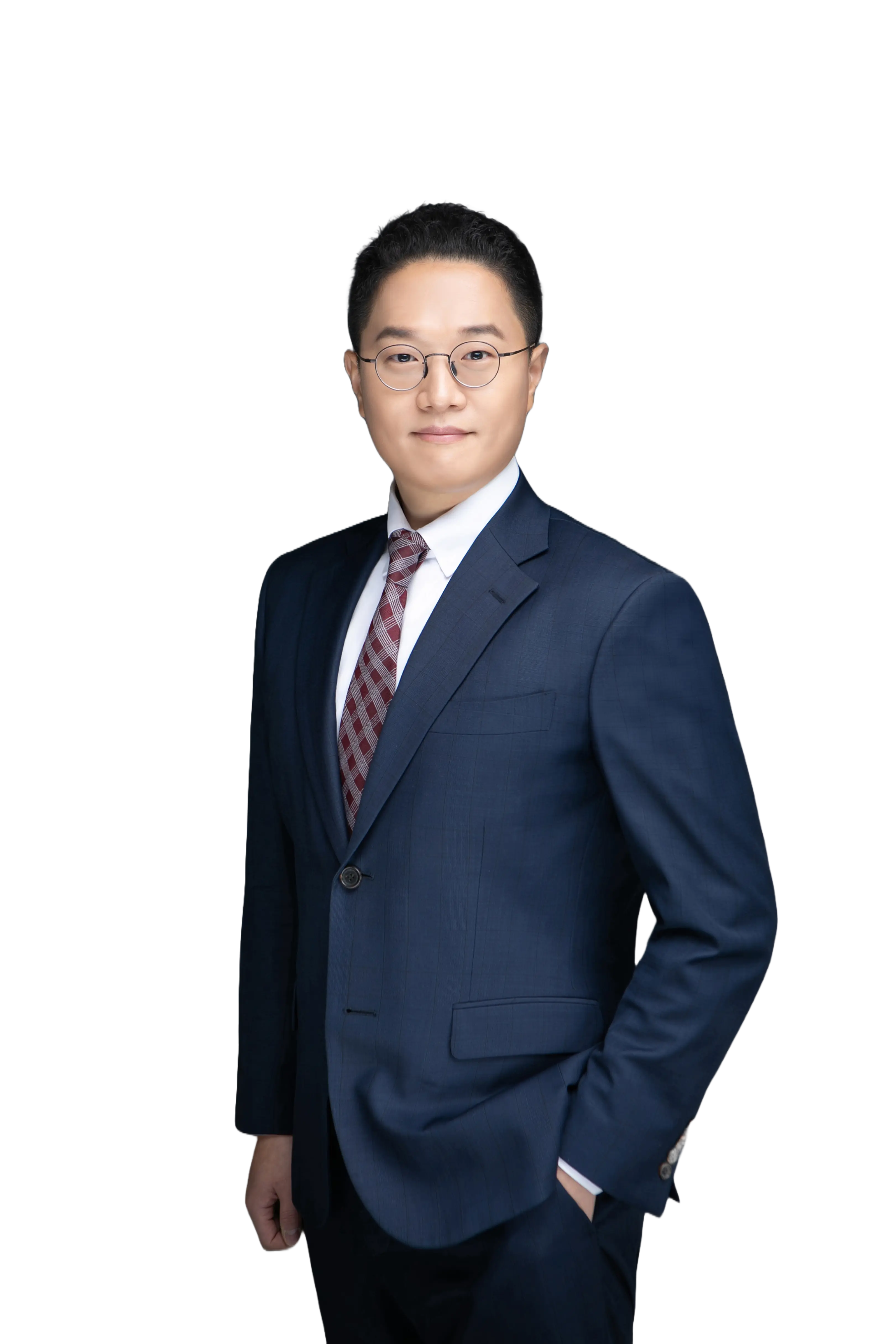
Hello, this is attorney Kwang-sik Kim of Cheongchul Law Firm.
On October 29, 2026, the 30th Civil Division of the Seoul Central District Court dismissed in full the claims of 89 Tesla owners who had sued Tesla Korea to rescind their purchase contracts for the FSD (Full Self-Driving) option and recover the price (Case No. 2024Gahap115937). The plaintiffs had each paid roughly KRW 6 million to 9 million per vehicle for the FSD option between 2019 and around 2022. They filed suit in December 2024, arguing that nine years after Tesla began selling the option in Korea in 2017, ‘full self-driving’ had still not materialized.
According to press reports, the court held that the FSD option was not a contract guaranteeing so-called ‘Level 5’ full self-driving requiring no driver intervention at all, but rather a ‘contract with an indefinite term’ (불확정기한부 계약) under which the features would be provided once regulatory approval and technological progress were achieved. Even if delivery of the features was delayed, the court reasoned, the delay was to comply with domestic and overseas regulations, so the company could not be held responsible.
Taking this ruling as a starting point, today we will look at what a contract that pre-sells future features should be understood to promise, whether a contract with an indefinite term can be rescinded when performance is delayed, what remedies remain for consumers, and what businesses should check.
[Question]
A few years ago I bought a Tesla and paid an extra KRW 8 million for the ‘full self-driving’ option, but I still have to keep my hands on the wheel. I never received the promised feature. Can’t I get my money back?
[Answer]
1. Summary of the Ruling — All Claims Dismissed
The plaintiffs sought rescission of the contract and a refund, arguing that Tesla Korea had failed to perform the FSD option contract. Their position was that even if the contract contained language to the effect that ‘the timing of feature delivery depends on each country’s regulations,’ consumers could not be made to wait indefinitely; that the features had not been delivered within a reasonable period; and that the promised features could not be implemented on existing HW3 vehicles. They also argued that Tesla’s renaming of the option to ‘FSD (Supervised)’ and its move to subscription-based sales amounted to effectively abandoning full self-driving.
The court rejected all of these arguments. It found that the subject of the contract was a set of partial automation features that presuppose driver intervention, such as traffic light and stop sign recognition and automatic steering on city streets; that the plaintiffs had already received Autopilot (AP) and Enhanced Autopilot (EAP); and that they had also acquired the status of being entitled to receive additional features. Citing the ‘FSD v14 Lite’ update, which added traffic light and stop sign recognition and city driving to HW3 vehicles, the court further held that performance could not be deemed to have become impossible. On the same grounds it declined to recognize warranty liability for defects, although the plaintiffs are reported to have countered that they had never asserted a warranty claim. This is a first-instance judgment, and whether the plaintiffs will appeal is not yet known.
▶ Card News Summary The Seoul Central District Court dismissed in full, at first instance, the refund claims of 89 Tesla owners for the FSD option. The court found that the contract did not promise Level 5 full self-driving and that, given the HW3 update, performance had not become impossible.
2. What Was Promised — A Product Name Is Not the Contractual Promise
The core issue in this case was what, legally, a product sold under the name ‘FSD,’ i.e., ‘full self-driving,’ actually promised. According to press reports, the court found that the plaintiffs had purchased the option knowing that the release date of the additional features was unknown and could take considerable time. The fact that purchasers were given notice at the time of purchase to the effect that ‘the timing of delivery may vary depending on each country’s regulatory situation’ also appears to have formed part of the basis for the decision. As a result, the subject of the contract was characterized as a bundle of partial automation features requiring driver supervision, plus the status of being entitled to receive additional features in the future if regulations and technology permit.
A comparison with the concept of autonomous driving under Korean law makes this easier to understand. Article 2(2) of the Act on the Promotion of and Support for Commercialization of Autonomous Vehicles (자율주행자동차 상용화 촉진 및 지원에 관한 법률 제2조 제2항) distinguishes between a ‘partially autonomous vehicle,’ which drives itself under limited conditions but requires driver intervention when necessary, and a ‘fully autonomous vehicle,’ which requires no driver intervention. FSD (Supervised) is a driver assistance feature (so-called Level 2) that requires the driver to watch the road ahead at all times and be ready to take immediate control, and it is understood not even to reach the autonomous vehicle stage contemplated by that Act. Tesla Korea has also reportedly stated in its guidance materials that FSD (Supervised) is not a fully autonomous driving feature and that the driver must remain attentive at all times. The case shows that the impression created by a product name alone does not define the scope of what the contract promises.
▶ Card News Summary The court found that buyers purchased the option knowing the release date of the additional features was uncertain. FSD (Supervised) is a driver assistance feature (Level 2) and does not even reach the autonomous vehicle stage under the Act.
3. What Is a ‘Contract with an Indefinite Term’ — No Rescission Even If Delayed?
An indefinite term (불확정기한) is a due date that is certain to arrive at some point but whose timing is not fixed. The court viewed the FSD contract as a contract with an indefinite term under which the additional features would be provided ‘when regulatory approval and technological progress are achieved.’ Civil Act Article 387(1) (민법 제387조 제1항) provides that where an obligation is subject to an indefinite term, the obligor is liable for delay from the time the obligor becomes aware that the term has arrived. If the term, namely regulatory approval and technological progress, has not yet arrived, it is difficult to say that performance has been delayed.
The requirements for rescission must also be examined. To rescind a contract on the ground of delayed performance, the obligee must, after the due date has passed, set a reasonable period and demand performance (a formal notice), and performance must still not be rendered within that period (Civil Act Article 544 (민법 제544조)). To rescind on the ground that performance has become impossible, the impossibility must have arisen from a cause attributable to the other party (Article 546 (제546조)). The prevailing interpretation is that rescission for delay also requires fault on the part of the obligor. The court held that even assuming there was a delay, it was for the purpose of complying with domestic and overseas regulations and related laws, so Tesla could not be found at fault.
However, the Supreme Court has consistently held that even with an indefinite term, once it becomes certain that the event designated as the term will not occur, the term is deemed to have arrived at that point (Supreme Court Decision 88Daka10579; Supreme Court Decision 2001Da41766, etc.), and there is precedent recognizing that the obligation arises even where the event has not occurred within a reasonable period (Supreme Court Decision 2009Da16643). On appeal, therefore, separate routes to a different conclusion may be contested. Whether the claim that the company has given up on delivering the features can be treated as a repudiation is another issue, and for repudiation to be recognized the intent must be clear and final (Supreme Court Decision 2018Da214210, etc.). If it is established that delivery of the features has become permanently impossible, rescission under Article 546 may come into play where the company is at fault, and a refund under the risk-allocation rule of Article 537 (제537조) where it is not.
▶ Card News Summary ‘Delivery upon regulatory approval and technological progress’ is a contract with an indefinite term, so delay is hard to establish before the term arrives, and rescission for delay requires a formal demand and fault. The conclusion may differ, however, once it becomes certain that the event constituting the term will not occur.
4. Paths Left for Consumers — Avoidance, the Advertising Act, and Evidence
This ruling is a first-instance judgment, and it is a decision on the purchase contracts between Tesla Korea and the plaintiffs only; it neither certifies autonomous driving technology nor permits driverless operation. Apart from rescission and refund, the first alternative theory is avoidance for mistake (Civil Act Article 109 (민법 제109조)). However, the expectation that ‘full self-driving will arrive soon’ is a mistake as to motive, so avoidance is recognized only where that motive was expressed as part of the contract or the counterparty induced the mistake, among other circumstances (Supreme Court Decision 2000Da12259, etc.). If there was deception in the sales process, avoidance for fraud (Article 110 (제110조)) can also be considered, but the case law does not treat some degree of exaggeration in product advertising as deception (Supreme Court Decision 2014Da24327, etc.). In particular, the right of avoidance must be exercised within three years from the date ratification becomes possible and within ten years from the date of the contract (Article 146 (제146조)), so anyone who purchased between 2019 and 2022 should first check whether that period has already expired.
If the advertising was false or exaggerated to the point of misleading consumers, a claim for damages under the Act on Fair Labeling and Advertising (표시·광고의 공정화에 관한 법률) is also worth considering. In that case the business cannot escape liability by showing the absence of intent or negligence (Article 10(2) (제10조 제2항)), and where proving the amount of damage is difficult, the court may recognize a reasonable amount of damages based on the overall purport of the pleadings and the results of the examination of evidence (Article 11 (제11조)). For reference, in January 2023 the Korea Fair Trade Commission imposed on Tesla a corrective order and a provisional surcharge of approximately KRW 2.852 billion (약 28억 5,200만 원), among other measures, for exaggerated advertising of driving range, charging performance, and fuel cost savings (Fair Labeling and Advertising Act) and for obstructing order cancellations (E-Commerce Act), but the allegation of exaggerated advertising of autonomous driving features raised early in the investigation was not found to be a violation.
Whichever route is taken, the case ultimately comes down to evidence. The contract and order screens at the time of purchase, the option description wording, advertising materials, and records of conversations with sales staff are the key materials. In Korea, FSD (Supervised) was reportedly introduced in November 2025 starting with US-built Model S and Model X vehicles equipped with HW4, and from July 2026 ‘FSD v14 Lite’ has been rolled out in stages to US-built Model 3 and Model Y vehicles equipped with HW3, while China-built Model 3 and Model Y vehicles were excluded. Since the features actually available differ depending on the vehicle’s specifications and country of manufacture, this should be checked as well.
▶ Card News Summary Avoidance for mistake or fraud has demanding requirements, and the exercise period for the right of avoidance (three years from the date ratification becomes possible) should be checked first. If the advertising was false or exaggerated, no-fault damages under the Fair Labeling and Advertising Act can also be considered.
5. What Businesses Should Check — Contracts That Sell ‘Future Features’
As products that gain features through software updates become more common, contracts that pre-sell features not yet completed are also becoming commonplace. Since the fact that buyers purchased knowing the delivery timing was uncertain formed part of the basis for this ruling, a business selling future features can reduce disputes by spelling out concretely in the contract and on the sales screen the conditions and expected timing of delivery, how non-delivery will be handled (refund, conversion, etc.), and differences in the scope of delivery depending on hardware specifications or country of manufacture.
In addition, when product names and advertising copy run ahead of the contract terms, a business may avoid contractual liability yet still be exposed to labeling and advertising regulation or consumer disputes. Sales staff explanation manuals should be aligned with the contract terms, and for online sales, the notice of whether withdrawal of subscription is available under the E-Commerce Act and the procedure for providing terms and conditions should be reviewed. It is also important to sort out in advance what rights existing purchasers retain when a feature is renamed or sales shift to a subscription model.
▶ Card News Summary A business selling future features should spell out in the contract the delivery conditions, expected timing, handling of non-delivery, and differences by specification, and should also review advertising, sales explanations, withdrawal-of-subscription notices, and provision of terms and conditions.
This ruling shows that the scope of legal liability is defined not by a product’s ‘name’ but by what was promised and what was disclosed at the time of purchase. For consumers, the surest way to prevent disputes is to confirm in the contract what they will receive and when before buying; for businesses, it is to narrow the gap between the expectations they sell and what the contract actually promises.
Cheongchul Law Firm provides legal advice across the IT and mobility sector, from reviewing sales contracts and terms and conditions for autonomous driving, mobility, and software-based products, to responding to labeling, advertising, and e-commerce regulation, and handling consumer disputes and litigation over contract rescission and refunds. Please feel free to contact us if you need advice on these matters.
Related work cases that are good to see together


서울 강남구 테헤란로 403 리치타워 7층
Tel. 02-6959-9936
Fax. 02-6959-9967
cheongchul@cheongchul.com
개인정보처리방침
면책공고
© 2025. Cheongchul. All rights reserved