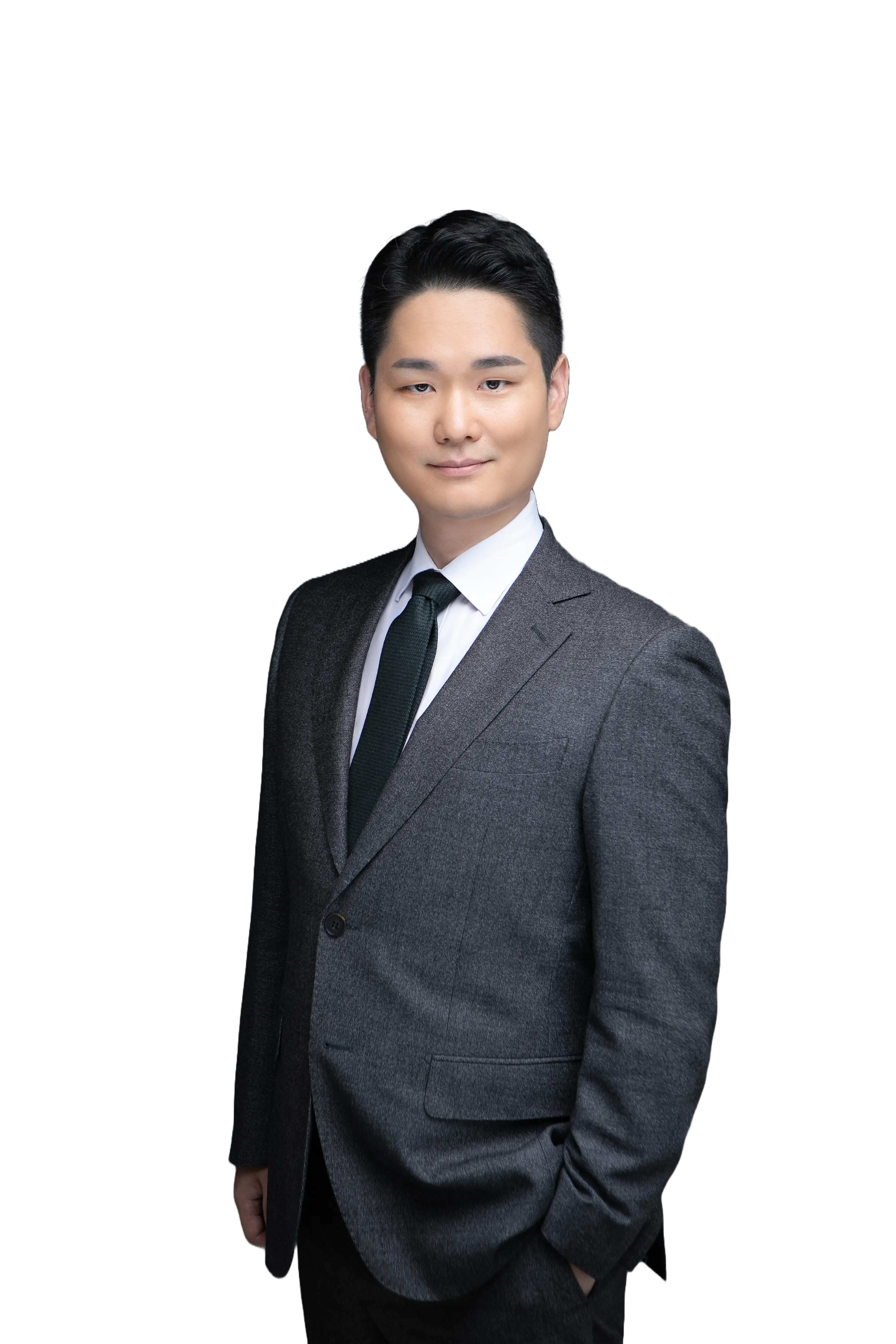
Hello, this is Attorney Choi Jong-ha from the Law Firm Cheongchul.
Our country's labor laws impose strong regulations to protect workers, and especially regarding dismissals, there are quite strict restrictions compared to other developed countries. Even foreign nationals who have directly signed employment contracts with companies headquartered abroad can be protected under Korean labor law and can file lawsuits in Korean courts if their usual place of work is in South Korea (International Private Law Articles 48 and 54).
The biggest exception recognized by the domestic Labor Standards Act, which provides such strict regulations and protections, is the 'businesses with fewer than 5 employees' (Labor Standards Act Article 11, Paragraph 1), intended to prevent excessively burdensome criminal liabilities and personnel management obligations from being imposed on small self-employed persons for whom it is generally very difficult to strictly apply the Labor Standards Act. However, due to the trends of global companies that have their Asian headquarters located in Hong Kong or Singapore, there are cases where the number of employees working in Korean offices managing substantial sales is only 3 to 4.
In such cases, the Supreme Court recently ruled consecutively on whether the Korean Labor Standards Act applies, and we will explore this issue.
[Question]
If there are fewer than 5 employees directly working at a foreign corporation's Korean office, does the Labor Standards Act apply?
[Answer]
In the past, the Labor Office, the Labor Board, and numerous lower court precedents have applied the principle that when comprehensive factors such as the relationship of use of provided facilities, the purpose and method of the business, organizational structure, personnel exchanges, work instructions, hiring of workers, determination of working conditions, and management of personnel matters are considered, and if it is determined that the foreign headquarters and the Korean workplace operate as a unified entity under organic relation, then the number of regular employees that serves as a standard for applying the Labor Standards Act is to be calculated by combining both the foreign headquarters and the Korean workplace. In short, if there are 1,000 regular employees at a headquarters in Germany, the assertion that the total number of regular employees is 1,004, even if the domestic employees are only 4, provides a reason to apply the Labor Standards Act.
However, the recent Supreme Court stated, "In international labor relations where foreign companies operate business activities in Korea and employ workers, it should be determined ‘whether it qualifies as a business using at least 5 employees in Korea,’ based on the principle that the Labor Standards Act applies fully by the ‘number of employees used domestically’" and made it clear that only those working in Korea should be included in the count of regular employees (Supreme Court, October 25, 2024, Decision 2023Du46074). Thus, in the future, when checking whether the Labor Standards Act applies to a foreign corporation's Korean branch, the answer to the simple question, 'So how many are working in Korea?' can be judged based on whether that number is 5 or more.
However, it is not necessarily the case that the application of the Labor Standards Act is completely excluded due to having fewer than 5 employees in a domestic branch. The Supreme Court viewed that it is reasonable to consider, concerning foreign corporations that have established independent affiliates in Korea while also having a Korean office, "the plaintiff and G Korea sales office represent a single business or workplace operated organically. Since the total number of regular employees between the plaintiff and G Korea sales office exceeds 5, the regulations regarding dismissal restrictions and remedy requests for unfair dismissal according to the Labor Standards Act must be applied to this case of dismissal." This clarified that even if the legal entities are separated or numbers are split into ‘Korean sales offices of the headquarters,’ the Labor Standards Act can be applied if there are 5 or more individuals working in Korea (Supreme Court, October 25, 2024, Decision 2023Du57876).
Furthermore, there are cases where the Labor Standards Act applies even when poorly written employment contracts imply a business with fewer than 5 employees, so there is no need to feel secure or give up just because they operate under that threshold. Many employers search for ‘labor contract templates’ or ‘standard labor contracts’ on the internet when drafting employment contracts, and the standard labor contract distributed by the Ministry of Employment and Labor includes a clause stating, "For matters not specified in this contract, the Labor Standards Act applies." However, lower court rulings based on this clause have stated, “If a business that employs 4 or fewer regular employees enters into an indefinite-term employment contract that specifies not to follow the matters not covered by the contract except for special agreements under the Labor Standards Act, then dismissals against employees must adhere to the limitations under the Labor Standards Act, and dismissals that violate this limitation are invalid” (Ulsan District Court, October 19, 2017, Decision 2017GaHap298), and this ruling was affirmed by the Supreme Court as an unreasoned dismissal. If an inexperienced employee was entrusted with preparing the employment contract, it is likely that such a clause may have been included.
The Law Firm Cheongchul has a wide range of experience and extensive expertise in various labor management issues such as labor relations, personnel management, wages, and dismissals. If you need help, please feel free to contact us, and we will be a reliable partner for you.
Related work cases that are good to see together

서울 강남구 테헤란로 403 리치타워 7층
Tel. 02-6959-9936
Fax. 02-6959-9967
cheongchul@cheongchul.com
개인정보처리방침
면책공고
© 2025. Cheongchul. All rights reserved