

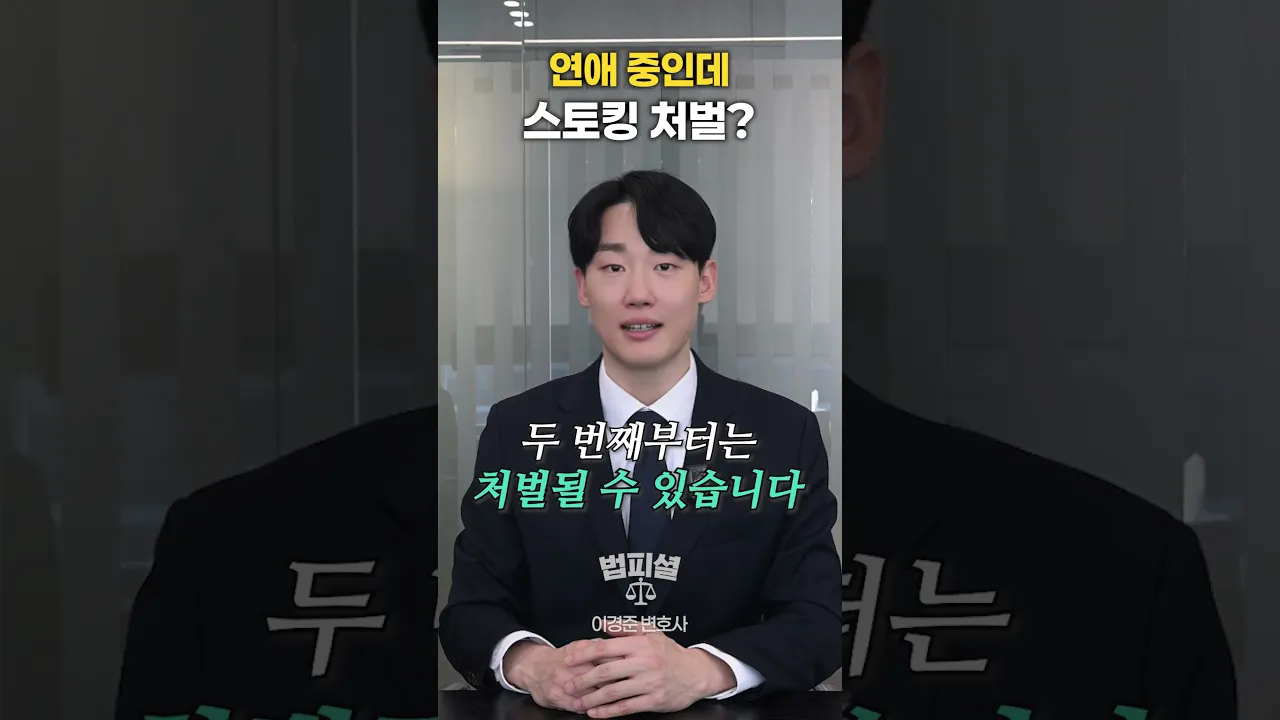
There are many cases where one attempts to reach out to their partner after a fight or breakup in order to change their mind or verify whether what was said in anger was sincere. However, if the other person has clearly stated, "Don't contact me," and you continue to reach out or show up, do you realize that it can become a 'stalking crime' rather than just a lovers' quarrel?
Simply saying, "I did it because I love you," or "I was trying to reconcile" is not a legal excuse. In today's post, we will summarize based on the details confirmed in the video about the criteria for establishing stalking in a romantic relationship, the possibility of punishment based on the number of contacts and visits, and legally safe ways to respond.
[Table of Contents]
Is it possible to report stalking between lovers?
Phone/Text: Is one time okay, but two times dangerous? (Repetitiveness)
Showing up: The reason why even a single visit can be punished (Continuity)
The solution offered by the law firm for safe reunions and reconciliation
1. Is it possible to report stalking between lovers?
Many people think, "Since we are dating, it cannot be stalking." Of course, as long as the normal romantic relationship continues, it does not establish stalking. However, if the other person has communicated a breakup or has clearly expressed their refusal by saying, "Don't contact me" during a conflict, the situation becomes entirely different.
According to the Stalking Punishment Act, the key requirement for stalking acts is 'approaching or contacting against the other person's will'. Even if the other person said it in anger, if they explicitly refused and you ignore that and continue to contact them, it can be considered stalking.
2. Phone/Text: Is one time okay, but two times dangerous? (Repetitiveness)
So, what about reaching out just once after hearing their refusal? The Stalking Punishment Act considers 'repetitiveness' as an important criterion for punishment.
One contact: If you contact them just once immediately after they requested no contact to apologize or explain, this might not fulfill the 'repetitiveness' criterion, making it unlikely to lead to punishment.
More than one contact: However, if you continue to contact them the second and third time despite receiving no response or being rejected, from that point on, it will be recognized as 'repetitive' behavior and you could be punished for stalking.
3. Showing up: The reason why even a single visit can be punished (Continuity)
Unlike phone or text, the act of showing up in person is judged much more strictly. "Is it punishable if I just show up once and wait?"
Yes, it can be punishable. If you wait in front of someone's house or follow them after encountering them, even if it is a single instance, 'continuity' can be established.
Phone/Text: Frequency (repetitiveness) is important
Approaching/Waiting: Temporal continuity (continuity) is important
Therefore, any act of waiting in front of a person's house or office against their will or following them can apply to stalking charges, even if it is a single instance.
4. The solution offered by the law firm for safe reunions and reconciliation
If you wish to restore your relationship after a breakup or conflict, emotionally appealing and contacting them recklessly is a very risky action legally. The safest method suggested by the law firm is as follows.
Leave just one sincere message: Send a message requesting an apology or conversation just once.
And wait: You should wait for their response.
No response is rejection: If the other person does not respond, you must accept that silence as 'rejection' and stop any further contact or visits.
Continuing to contact or show up to someone who isn't responding can induce fear in them, which may lead to immediate charges of stalking.
Stalking can be considered a 'crime' rather than 'love.' Whether a stalking crime has been established is assessed based on not only the continuity and repetitiveness of behavior but also various factors including the circumstances and context at the time. Particularly, issues between lovers involve emotional aspects, so the outcome can significantly vary depending on the initial response.
If you have inadvertently found yourself accused of stalking or require legal advice regarding related issues, please consult an expert without delay. The law firm offers systematic legal support from the initial stages to ensure that the client's grievances are addressed.
This post has been created for the purpose of providing legal information and legal judgments may vary depending on specific circumstances.
Related work cases that are good to see together


서울 강남구 테헤란로 403 리치타워 7층
Tel. 02-6959-9936
Fax. 02-6959-9967
cheongchul@cheongchul.com
개인정보처리방침
면책공고
© 2025. Cheongchul. All rights reserved