

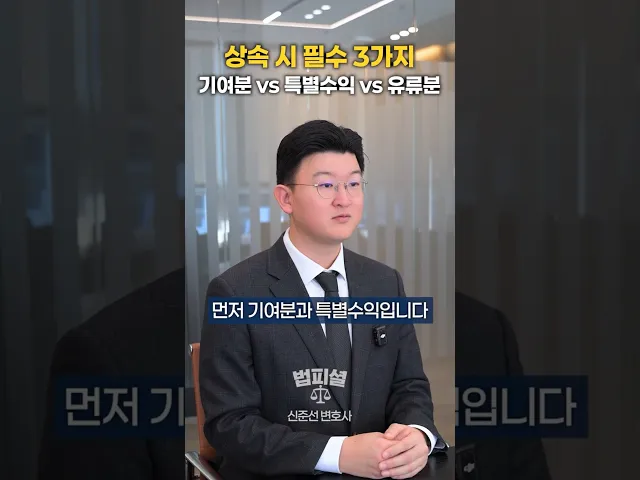
The concept that causes the most confusion in the process of dividing inherited property is the share of contribution, special benefits, and reserved portion. The 'share of contribution (+)', which is what a child who takes care of their parents receives more of, and the 'special benefits (-)', which is what a child who has already received a gift during the parent's lifetime receives less of, are opposing concepts. In contrast, the 'reserved portion' is the minimum share guaranteed by law regardless of the deceased's wishes, applying a separate legal principle from the share of contribution. In this post, the law firm Cheongchul will explain in an easy way the differences between these three systems, which are central to inheritance disputes, and the practical points of claiming a reserved portion.
Table of Contents
Share of Contribution vs. Special Benefits: The Plus (+) and Minus (-) of Inheritance
Reserved Portion System: The Minimum Inheritance Rights Guaranteed by Law
The Relationship Between Share of Contribution and Reserved Portion: When Can You Claim a Reserved Portion?
The Reason You Need the Help of an Inheritance Specialist Lawyer
1. Share of Contribution vs. Special Benefits: The Plus (+) and Minus (-) of Inheritance
The first thing to consider when dividing inherited property is the actual contributions of each heir and the benefits they have already received.
Share of Contribution (Plus +): This refers to the amount that an heir who has specifically supported the deceased (such as a parent) or contributed to the maintenance and formation of property 'receives more'.
Special Benefits (Minus -): This refers to the property that an heir has received in advance as gifts for marriage funds, home purchasing funds, etc., and the person who received this will 'receive less' later on.
Ultimately, the share of contribution and special benefits are concepts that operate in opposite directions to ensure fair distribution of the inheritance.
2. Reserved Portion System: The Minimum Inheritance Rights Guaranteed by Law
Reserved Portion is fundamentally different in nature from the preceding concepts. Even if the deceased allocates property to a specific person through a will or disposes of it at will, there is a system that mandates leaving behind a legally guaranteed minimum share for other heirs. This is to protect the survival rights of the bereaved family and ensure fairness among heirs.
3. The Relationship Between Share of Contribution and Reserved Portion: When Can You Claim a Reserved Portion?
Many people contemplate litigation, saying, "My sibling has been recognized with a lot of share of contribution, and my reserved portion has been infringed." However, there are points to be cautious about.
Separate Systems: Just because a sibling has been recognized with a lot of share of contribution, it does not mean that the amount of the other sibling's reserved portion is arithmetically reduced, and you cannot claim the return of the reserved portion based solely on the share of contribution.
Claimable Scope: If the other party has received property through gifts or legacies (gifts by will) in addition to the recognized share of contribution, a claim can be made for that part. In other words, in cases where there is only a share of contribution, there may be no practical benefit to claiming, so a precise legal review must be conducted first.
4. The Reason You Need the Help of an Inheritance Specialist Lawyer
Inheritance is not simply a matter of dividing property. The inheritance amount an individual can actually receive can vary widely depending on what legal principles apply. In particular, the recognition of the share of contribution, the assessment of special benefits, and the possibility of claiming the return of a reserved portion are very difficult to determine without a precise review by an expert.
This post has been written for the purpose of providing legal information, and legal judgments may vary depending on specific cases.
Related work cases that are good to see together


서울 강남구 테헤란로 403 리치타워 7층
Tel. 02-6959-9936
Fax. 02-6959-9967
cheongchul@cheongchul.com
개인정보처리방침
면책공고
© 2025. Cheongchul. All rights reserved