
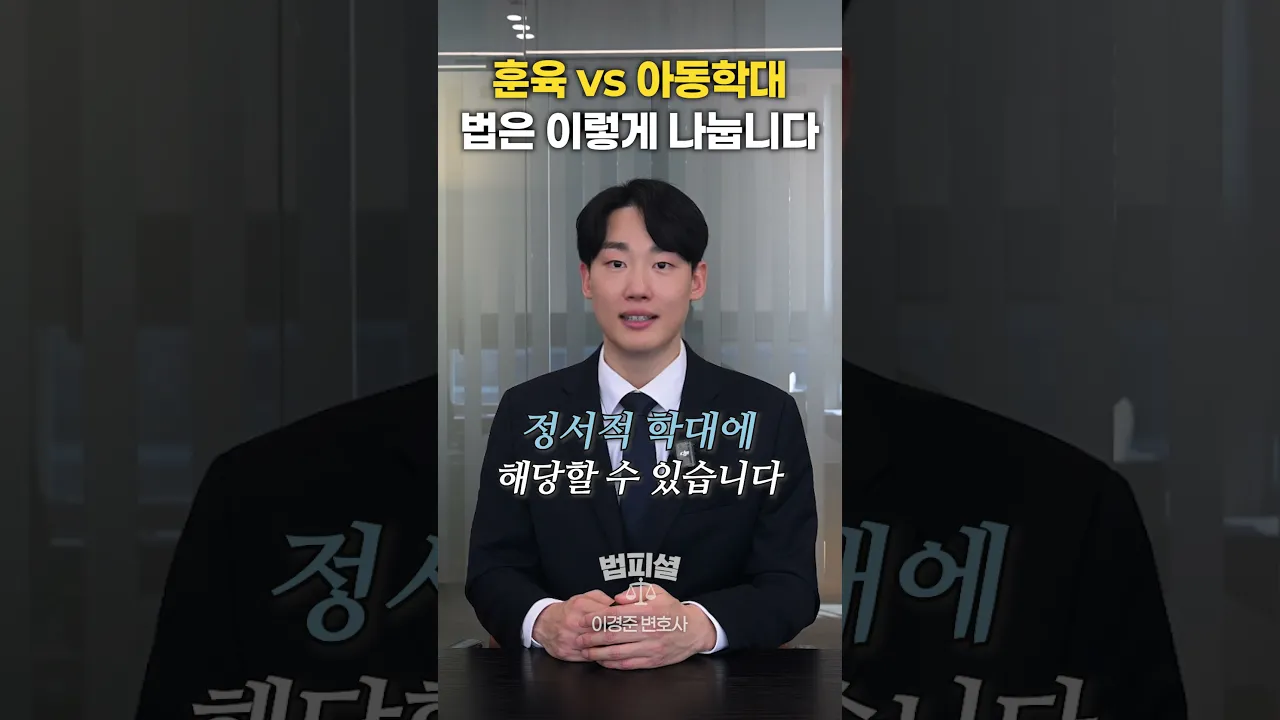
When raising children, there may be times in the discipline process where voices are unintentionally raised or physical punishment is used. Parents of large high school students may easily think, "Isn't it just child abuse to discipline a grown child?" However, legally, high school students are also protected under child abuse laws, and regardless of the intent to discipline, methods can lead to punishment depending on the circumstances.
The law firm Cheongchul provides clear criteria regarding the legal boundary between discipline and abuse. This post summarizes the conditions under which child abuse can be established when disciplining high school students based on the content of the video.
[Table of Contents]
Are high school students also protected from 'child abuse'?
'Loving spankings' are a thing of the past, criteria for physical abuse
Is yelling at a child considered emotional abuse?
Legal guidelines for safe discipline
Response to child abuse allegations, assistance from Cheongchul Law Firm
1) Are high school students also protected from 'child abuse'?
One common misconception is regarding the age of 'children'. You may think, "If they are in high school, they are grown and not a child," but legally this is not the case. According to the Child Welfare Act, 'child' refers to a minor under the age of 18. Therefore, even if they are high school students, they still fall under the protection of child abuse laws, and inappropriate disciplinary actions can lead to allegations of child abuse.
2) 'Loving spankings' are a thing of the past, criteria for physical abuse
There are instances where a so-called 'spanking' is administered for discipline. However, the courts apply very strict criteria to physical punishment, even if it is intended for discipline. The video explains that the act of hitting a child can be evaluated as physical abuse under the Child Welfare Act. The criteria are judged based on 'unnecessary use of force', and in most cases, the act of hitting with a stick is very likely classified as physical abuse under the law. Thus, physical disciplinary actions should be avoided.
3) Is yelling at a child considered emotional abuse?
Then, is scolding a child verbally without hitting acceptable? It depends on the situation and context. Simply raising one's voice while scolding can also indicate emotional abuse under the Child Welfare Act.
Cases that may be recognized as abuse: Even if it was intended as discipline, if the parent used verbal abuse or personal attacks against the child.
Cases difficult to consider as abuse: When the parent raised their voice but the content constituted justifiable discipline.
In other words, what matters more than the volume of the voice is the 'content', and it should be noted that insults that disregard the child's dignity can constitute emotional abuse.
4) Legal guidelines for safe discipline
As a parent, how can one guide their child correctly while avoiding legal issues (child abuse)? The video presents two principles.
Avoid physical contact: It is best to avoid actions that involve hitting a child.
Be cautious with verbal expressions: Even when disciplining, swear words or insulting expressions should never be used.
Ultimately, the safest and correct method is to guide the child in a manner that respects their dignity.
Cases involving child abuse investigations or inquiries due to incidents during the discipline process are increasing. To prove that the discipline was justified, an objective analysis of the situation at that time and legal responses are essential.
Cheongchul Law Firm, based on extensive experience with child abuse cases, closely examines the circumstances of the discipline and provides the best legal solutions for clients. If you are troubled by related issues, please consult with experts from Cheongchul Law Firm.
This post is intended to provide legal information and specific legal judgments may vary depending on the specific circumstances.
Related work cases that are good to see together


서울 강남구 테헤란로 403 리치타워 7층
Tel. 02-6959-9936
Fax. 02-6959-9967
cheongchul@cheongchul.com
개인정보처리방침
면책공고
© 2025. Cheongchul. All rights reserved